
The short answer
- Pick a dog that settles easily indoors and doesn't bark much, because energy and noise matter far more in a flat than size.
- Plan for a dog walker or day care if you're out longer than about four hours, the limit UK welfare guidance suggests for adult dogs.
- Check stairs, lifts and how far you are from grass before choosing, especially for a young puppy or an older dog with arthritis.
- If you want a flat-faced breed, ask to hear both parents breathe and see breathing assessment results before you commit.
- Consider an adult rescue dog, since a good rescue can already tell you whether that dog is calm, quiet and copes alone.
The best dogs for apartments are calm indoors, don’t bark much and are happy with a moderate amount of exercise. Size matters less than most people think. Good choices include the Cavalier King Charles Spaniel, Bichon Frise, Shih Tzu, Havanese, Whippet and, surprisingly, the retired racing Greyhound. Flat-faced breeds such as French Bulldogs fit the space but come with serious health trade-offs, and a calm adult mixed-breed dog from a rescue can suit flat life better than any breed list.
What actually matters in an apartment dog
Energy level
This is the big one. A dog who needs two hours of hard exercise a day will take that energy out on your skirting boards if they don’t get it. The Royal Kennel Club rates the Border Collie and Labrador as needing more than two hours daily. That’s possible in a flat, but only if you’re out walking, running or training with them every single day.
Noise
Thin walls and shared corridors make barking one of the quickest ways to fall out with neighbours. Breeds bred to alert or to give voice on a scent, many terriers and hounds such as Beagles, are harder to keep quiet. A dog who barks at every footstep in the corridor will make you unpopular quickly.
Ability to settle
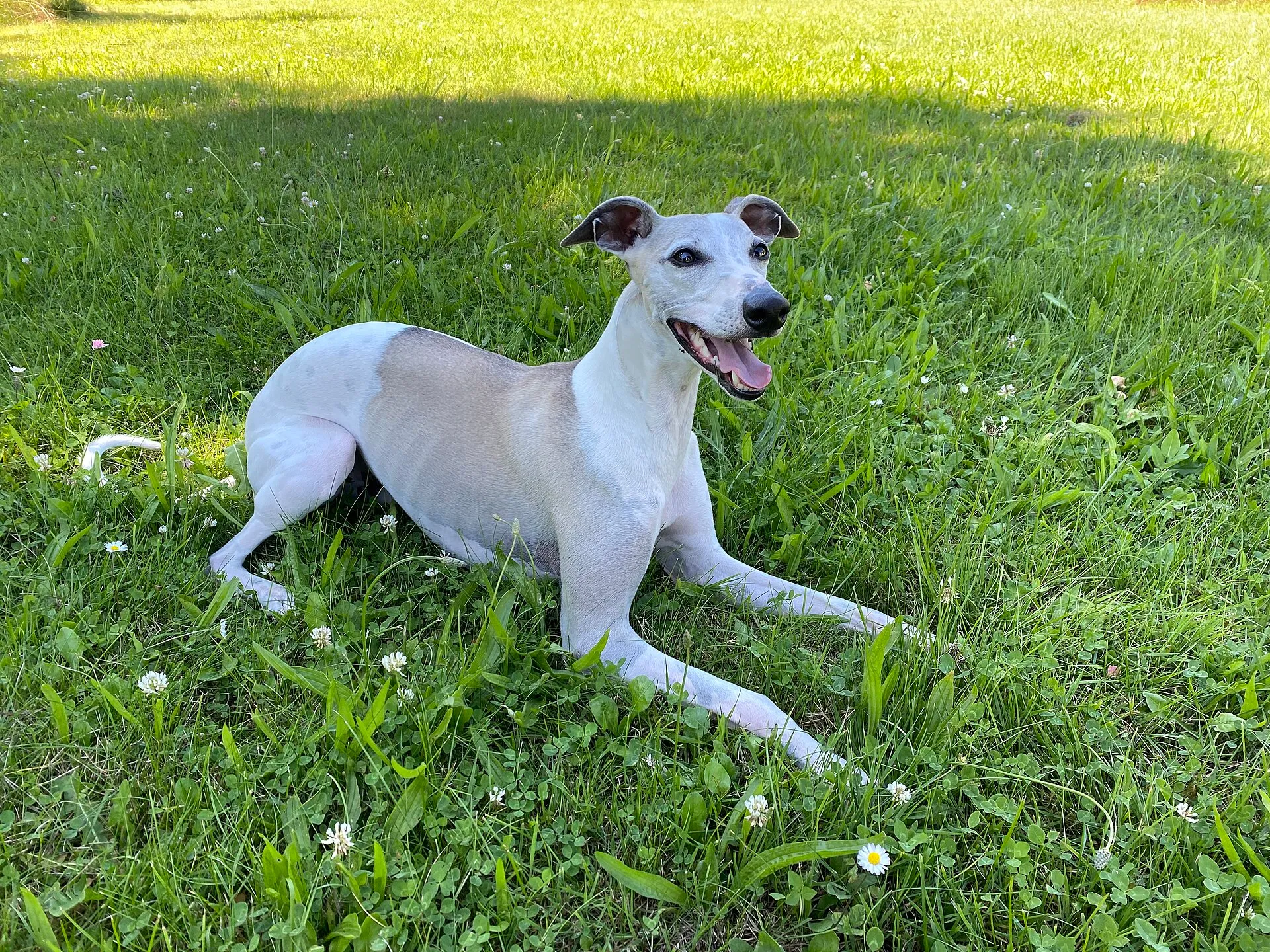
A dog who can switch off and nap while you work matters more than a dog who is small. Many sighthounds are excellent at this. Some tiny breeds are not.
Coping with being alone
Most apartment dwellers work, and many dogs struggle when left. UK welfare guidance generally says adult dogs shouldn’t be left alone for more than about four hours, so plan for a dog walker or day care if you’re out longer. Our separation anxiety guide covers training a dog to cope alone.
Practical access
Stairs, lifts and how far you are from a patch of grass matter far more than square metres. A puppy needing the toilet every hour, or a senior dog with arthritis, on the eighth floor with no lift is a real problem.
Size (less than you’d think)
Size affects how easy a dog is to carry, how much they cost to feed and treat, and whether your building allows them. It doesn’t predict how well they’ll cope with flat life. A Greyhound weighing 25–35 kg (55–77 lb) can be easier to live with than a 6 kg (13 lb) terrier with energy to burn.
12 breeds that often suit apartments
Exercise figures below come from The Royal Kennel Club’s breed profiles. Breed is only a rough guide: a 2022 study in Science by Morrill and colleagues, covering more than 18,000 dogs, found breed explained only about 9% of the variation in individual behaviour. Meet the actual dog.

1. Cavalier King Charles Spaniel
- Pros: Affectionate, adaptable, rarely a big barker. Up to about an hour of exercise a day. The Royal Kennel Club lists it as suited to flats.
- Cons: Significant inherited health problems. Mitral valve disease often appears earlier in Cavaliers than in other breeds, and syringomyelia, a painful spinal cord condition, is a concern. Choose a breeder who heart-tests and MRI-screens. Sheds and needs grooming more than once a week.
2. Bichon Frise
- Pros: Cheerful, small, and needs only up to about 30 minutes of exercise a day. Coat doesn’t shed much, which helps in small spaces.
- Cons: The Royal Kennel Club lists daily grooming, and most pet Bichons also need regular professional clipping, which is a real ongoing cost. Like many companion breeds, individuals vary in how vocal they are and how well they cope alone.
3. Shih Tzu
- Pros: Small, with modest needs of up to an hour of exercise a day. Listed by The Royal Kennel Club as suited to flats. The coat doesn’t shed much.
- Cons: Flat-faced, so prone to breathing difficulties, eye problems and dental crowding. Needs daily grooming or a short clip. Poor heat tolerance.
4. Havanese
- Pros: Small, sociable and needs only up to about 30 minutes of exercise a day. Usually easy to train with rewards.
- Cons: Long coat needs daily grooming. Bred as a companion dog, so a household where it’s left alone for long days is a poor fit.
5. Whippet
- Pros: The Royal Kennel Club describes Whippets as gentle and affectionate and says they settle comfortably into home life. Up to an hour of exercise a day and a short, easy coat.
- Cons: Strong chase instinct, so off-lead running needs a secure area. Thin-skinned and feels the cold, so a coat in winter is a practical need, not a fashion statement.
6. Greyhound (especially retired racers)
- Pros: Famously lazy at home, often sleeping much of the day. Up to an hour of exercise a day. Quiet and gentle. Many adult ex-racers are available through rescue organisations in the UK, Ireland, Australia and the US.
- Cons: Large, so check building weight limits and whether you can manage stairs. High prey drive; some can’t live with cats or small pets. The Royal Kennel Club rates the breed as best in a house with a garden, though many adopted ex-racers do well in flats.
7. Italian Greyhound
- Pros: A miniature sighthound with up to an hour of daily exercise, and a short coat that doesn’t shed much.
- Cons: Very fine-boned, so falls and big jumps off furniture are a genuine injury risk. Thin-coated and feels the cold. Ask the breeder or rescue how reliable a particular dog’s house training is, because accidents are harder to manage when the nearest grass is several floors down.
8. Miniature Poodle
- Pros: Bright, trainable and athletic in a small to medium body. Low-shedding coat. Up to an hour of exercise a day.
- Cons: Needs mental work as well as walks, or gets bored. Daily grooming and regular clipping. Some can be alert barkers without training.
9. Boston Terrier
- Pros: Small, friendly, short-coated and needs up to an hour of exercise a day.
- Cons: Flat-faced, with the breathing, eye and heat problems that come with that. The Royal Kennel Club recommends breathing assessments for breeding dogs.
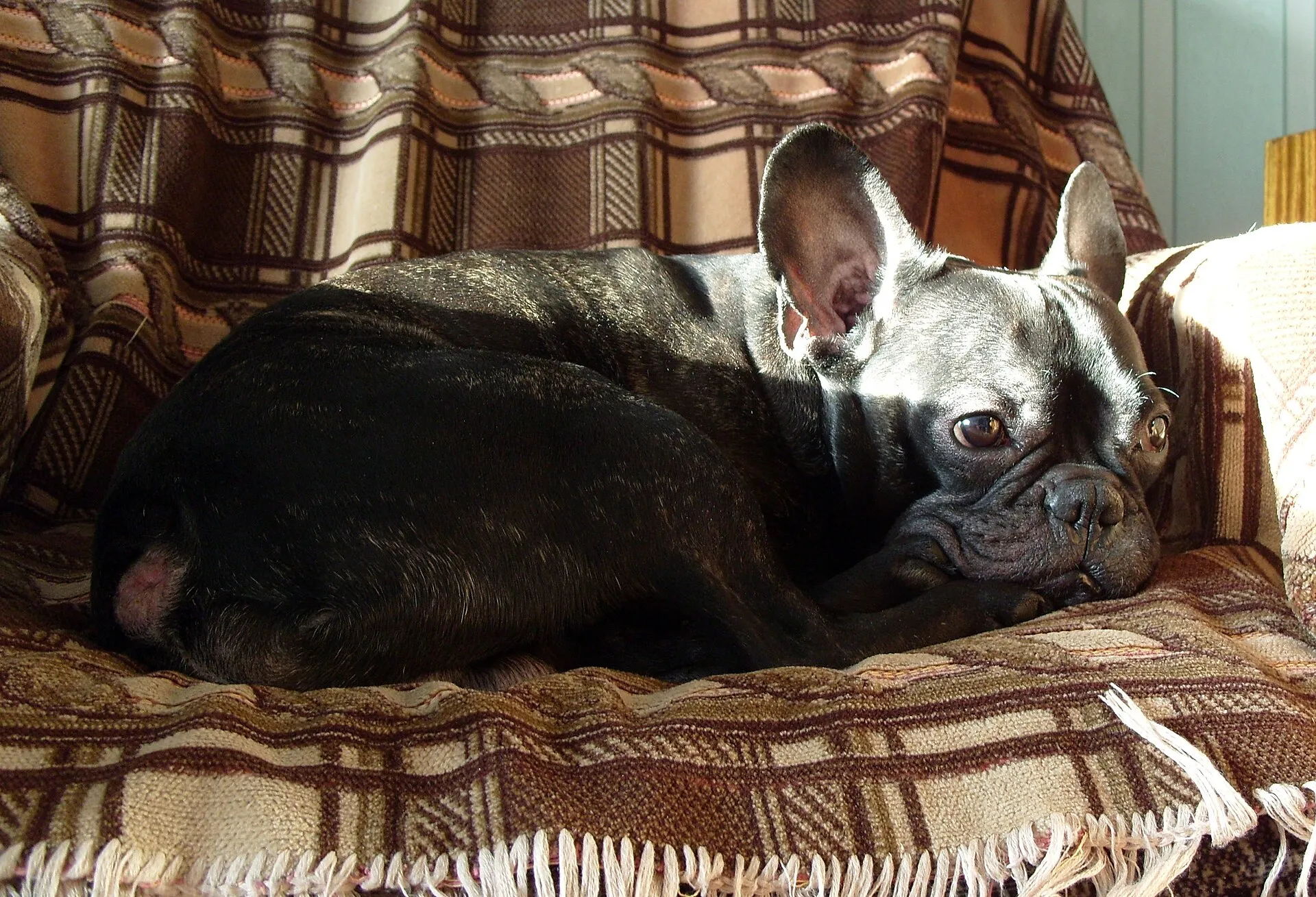
10. French Bulldog
- Pros: Small, generally quiet, and needs up to an hour of gentle exercise a day. Listed by The Royal Kennel Club as suited to flats.
- Cons: One of the highest-risk breeds for brachycephalic obstructive airway syndrome (BOAS), plus skin, eye and dental problems linked to its face shape. Poor heat tolerance. The University of Cambridge BOAS Research Group notes that snoring and snorting are signs of airway obstruction, not “normal for the breed”. Expect higher vet costs.
11. Chihuahua
- Pros: Tiny, needs up to about 30 minutes of exercise a day, and is easy to carry up stairs and onto public transport.
- Cons: The Royal Kennel Club describes the breed as “bold and saucy”, and many are quick to alert-bark at noises in corridors. Small enough to be hurt by falls or rough handling, so not ideal with very young children. Feels the cold.
12. Pug
- Pros: Affectionate, small, and content with modest exercise in short sessions.
- Cons: Flat-faced, with the same breathing, eye, skin and heat concerns as French Bulldogs. Extra weight makes breathing harder, so portion control matters. Pugs shed noticeably despite their short coat.
Often recommended, often a struggle
Jack Russell Terriers, Beagles and Border Collies show up on lots of apartment-dog lists. They’re great dogs, but high energy, strong voices or both make them harder in a flat. They can work for very active owners who exercise them heavily every day.
A note on flat-faced breeds
Four of the twelve breeds above are brachycephalic. They suit apartments on paper, which is part of why they’re popular, but they are also among the breeds most affected by breathing problems and heatstroke. If you’re set on one:
- Ask to see both parents and hear them breathe at rest and after a short walk. Quiet breathing is what you want.
- Ask for breathing assessment results, such as the UK Respiratory Function Grading scheme.
- Keep them lean and walk them only in cool weather.
- Consider pet insurance before you bring them home, and read the policy for exclusions on breed-related conditions.
Mixed breeds and rescue dogs
Mixed-breed dogs don’t come with a predictable label, but that matters less than it seems. The Morrill study found most behaviour varies far more between individual dogs than between breeds. What you want is a dog whose temperament you already know.
That’s where an adult rescue dog has a real advantage. A good rescue can tell you whether a dog is calm indoors, barks at noises, copes alone, gets along with other dogs in lifts and corridors, and is house trained. You can’t know any of that about an eight-week-old puppy of any breed. Many rescues in the UK, Ireland, the US, Canada, Australia and New Zealand will match dogs to flat living if you tell them about your home.
Building and rental pet rules differ by country
Check the rules before you fall in love with a dog.
- England: From 1 May 2026, under the Renters’ Rights Act, private tenants can request a pet and landlords can’t unreasonably refuse. According to the RSPCA, landlords must respond in writing within 28 days. This applies to private renting in England, not social housing, and Scotland, Wales and Northern Ireland have their own rules.
- New South Wales, Australia: In Cooper v The Owners – Strata Plan No 58068 (2020), the NSW Court of Appeal found a blanket strata by-law banning all animals invalid as “harsh, unconscionable or oppressive”. Strata schemes can still set reasonable conditions. Other Australian states have their own rules.
- Elsewhere: In the US, Canada and many other countries, landlords, condo boards, co-ops and homeowners’ associations commonly restrict or ban pets, often with weight, breed or number limits. Rules vary by state, province and building. Ask for the pet policy in writing and check whether your lease, strata or condo rules have extra conditions such as carrying dogs in lifts or registering them.
Budget for the vet as well as the dog
Small breeds can still have big vet bills. Flat-faced breeds in particular often need treatment for breathing, eye and skin problems, and Cavaliers commonly need long-term heart care. Pet insurance can help spread these costs. Policies differ a lot in what they exclude, especially pre-existing and breed-related conditions, and premiums vary by country, breed, age and postcode or ZIP code. Compare the details before you buy.
The bottom line
For apartment life, pick a dog that settles easily and doesn’t bark much, rather than simply a small one. Cavaliers, Bichons, Havanese, Shih Tzus, Whippets and retired Greyhounds often fit well, while flat-faced breeds suit the space but carry heavy health costs. An adult rescue dog whose temperament is already known can be the safest choice of all. Check your lease or building rules first, and plan for the hours your dog will spend alone.
Questions owners ask
Can a big dog live happily in an apartment?
Yes, if their energy and noise levels suit it and you can meet their exercise needs. A retired racing Greyhound often suits a flat better than a young Jack Russell. Lifts, stairs and access to outdoor space for toilet trips matter more than floor area.
What are the quietest dog breeds for apartments?
Sighthounds such as Greyhounds and Whippets are generally quiet indoors. Cavalier King Charles Spaniels and many Shih Tzus are not big barkers either. Individual dogs vary, so ask a breeder or rescue about the specific dog's noise habits.
Are flat-faced breeds like French Bulldogs good for apartments?
Their size and energy suit flats, but they carry a high risk of breathing, skin and eye problems, and they cope poorly with heat. If you choose one, look for parents with good breathing assessments and budget for higher vet bills.
Can my building or landlord ban dogs?
It depends where you live. In England, private landlords can no longer unreasonably refuse a tenant's pet request from May 2026, and in New South Wales a blanket strata ban on pets has been ruled invalid. In many other places, leases and building rules can still restrict or ban dogs, so check before you commit.
Sources
- The Royal Kennel Club — Cavalier King Charles Spaniel breed profile
- The Royal Kennel Club — French Bulldog breed profile
- The Royal Kennel Club — Greyhound breed profile
- The Royal Kennel Club — Bichon Frise breed profile
- Broad Institute — Dog genetics suggest that behavior is more than just breed (Morrill et al., Science, 2022)
- University of Cambridge BOAS Research Group — Recognition and diagnosis of BOAS
- RSPCA — Renters' Rights Act keeps pets and families together in England
- Law Society Journal (NSW) — Cooper v The Owners – Strata Plan No 58068
This guide is general information, not a substitute for advice from a vet who has examined your dog. Every claim is checked against the sources above. How we research and fact-check. Spotted an error? Tell us.