The short answer
- Expect mouthing to ease once adult teeth are in at around 7 months, and use the months before then to teach a soft mouth.
- Make teeth on skin end the fun every time: go still, turn away, then step out for 30–60 seconds if it carries on.
- Offer a toy before the bite, not after, and use tug toys instead of hands for rough play.
- Protect naps, because puppies need 18–20 hours of sleep and overtired puppies bite more.
- Get a vet check if biting starts suddenly or gets worse, and a qualified behaviour professional if it comes with stiffening, growling or real injuries.
You stop a puppy biting by teaching it that teeth on skin ends the game, while giving it plenty of things it is allowed to bite. Mouthing is normal puppy behaviour, and Dogs Trust says it usually eases once teething finishes at around 7 months, so the goal for the months before then is a puppy that learns to be gentle, not one that never uses its mouth.
The good news is that the methods that work are boring and repeatable. The bad news is that everyone in the house has to do them, every time.
Why puppies bite
Puppies explore with their mouths the way toddlers explore with their hands. Dogs Trust lists the usual drivers: play, overexcitement, frustration, tiredness, sore gums, and sometimes fear or pain. A puppy may also nip to start a game, especially if nipping has started games before.
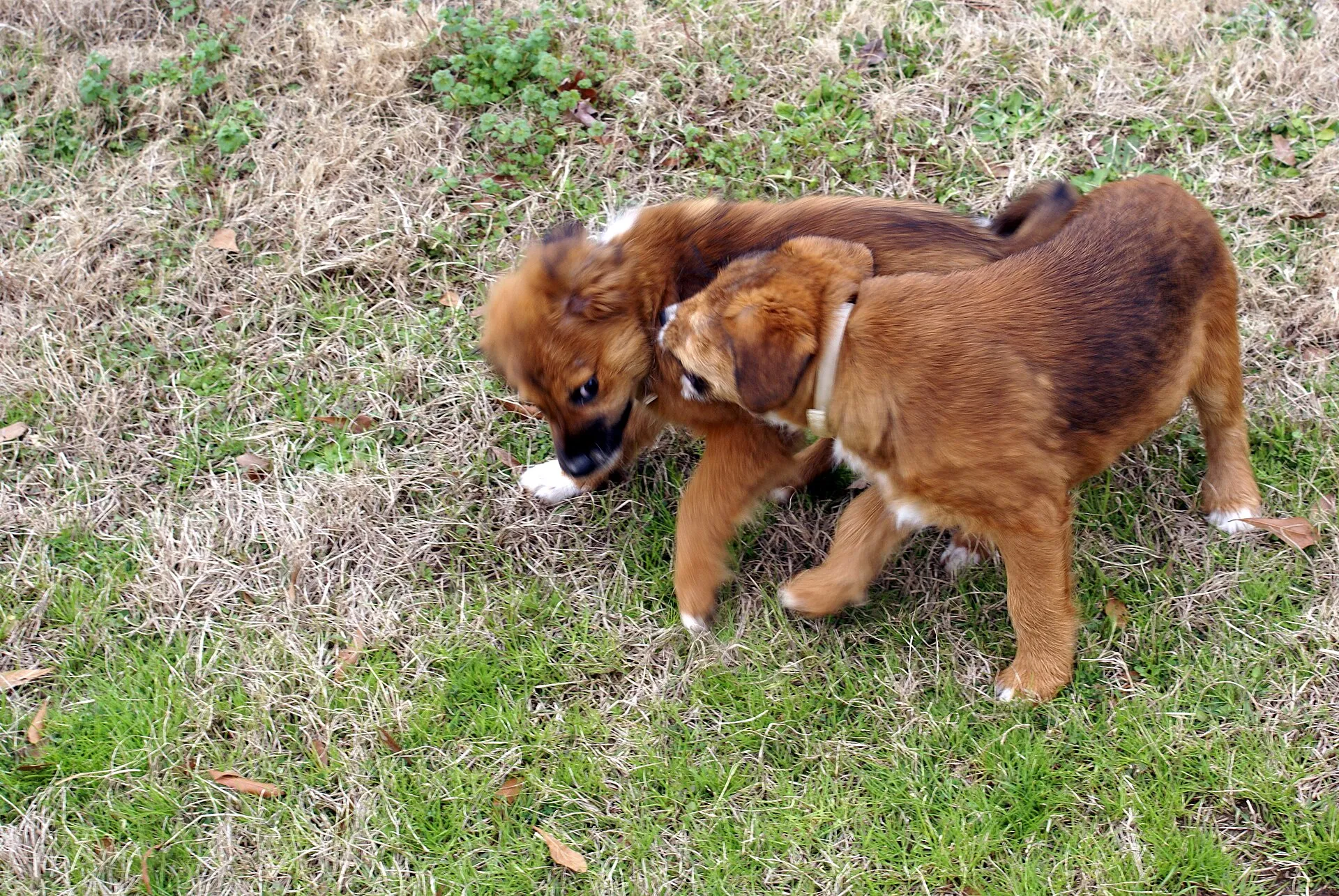
Littermates also teach each other bite control. The ASPCA explains that a puppy that bites too hard during play usually gets a yelp and a sudden end to the game from its sibling. A puppy that learns gentle mouthing with people is, in the ASPCA’s view, less likely to bite hard in other situations later. That skill is called bite inhibition, and it is worth more than any trick you’ll teach.
Mouthing and biting aren’t the same thing. Dogs Trust describes mouthing as little pressure and no real tooth contact, while biting involves more pressure, grabbing or holding on, and sometimes signs of fear such as growling or baring teeth.
The puppy biting timeline
Every puppy is different, but the stages are fairly predictable.
| Age | What’s happening | What to focus on |
|---|---|---|
| 3–5 weeks | Baby teeth start to erupt; most dogs have 28 | Littermates start teaching bite control |
| 7–8 weeks | Puppy socialisation classes can start (AVSAB) | Gentle handling, toys everywhere, plenty of sleep |
| 3–16 weeks | Sensitive period for socialisation (VCA) | Safe, calm meetings with people, dogs and places |
| About 12 weeks | Baby teeth start falling out; gums can be sore (Dogs Trust) | Chew toys of different textures |
| 4–5 months | Adult teeth begin to appear (Merck) | Keep redirecting; expect chewing to peak |
| About 7 months | All 42 adult teeth are usually in | Mouthing usually decreases |
| 6–18 months | Adolescence (VCA) | Keep rules consistent; don’t let rough play creep back |
The ASPCA puts the turning point bluntly: mouthing that is cute at seven weeks becomes a problem by three or four months as the puppy grows. That’s why it pays to start on day one.
What to do when your puppy bites
Pick one routine and get everyone in the household to use it. Consistency matters more than which method you choose.
Step 1: Go still and stop the fun
The moment teeth land on skin, stop moving. Dogs Trust advises staying still and dropping or hiding any toy. The ASPCA warns against jerking your hand away, because a moving hand looks like a toy and invites more grabbing.
Step 2: Turn away
If the mouthing continues, turn your body away and fold your arms. Dogs Trust lists this as the second step. You’re removing the attention and the game in one move.
Step 3: Take a short break
If your puppy keeps going, leave. The ASPCA suggests walking away and ignoring the puppy for 30 to 60 seconds, and leaving the room for that long if it follows and keeps nipping. Dogs Trust suggests using a door or stair gate to let the puppy settle. Puppy-proof the room first so the break isn’t a chance to eat a cable.
Step 4: Reward calm
When your puppy is calm, bring the good stuff back: restart play, offer a toy, scatter some treats or give a gentle fuss. This is the part people forget. The puppy needs to learn what does work, not just what doesn’t.
What about yelping?
This is where respected sources differ. The ASPCA suggests a high-pitched yelp and a limp hand when your puppy bites hard, used no more than three times in 15 minutes, then switching to time-outs if it isn’t working. Dogs Trust’s method skips the yelp and focuses on staying calm, with no raised voices.
In practice, watch your puppy. If a yelp makes it pause and soften, it may help. If it winds your puppy up into a frenzy of excited nipping, stop yelping and stick to stillness and breaks.
Prevent the bites before they start
Most biting happens in predictable moments. Plan for them and the problem shrinks.
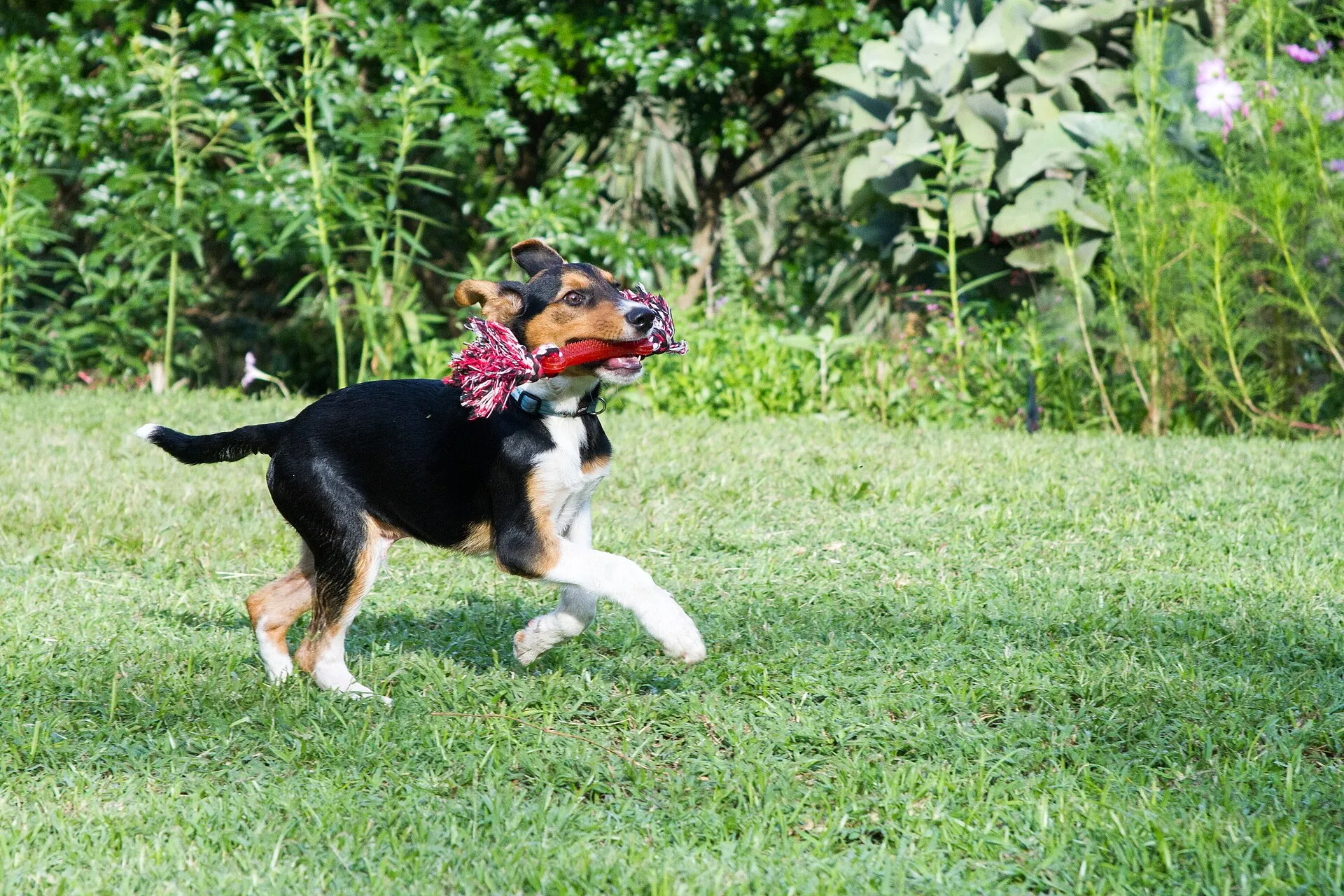
- Offer a toy first. Dogs Trust suggests watching for early play signals, such as bouncing or batting with a paw, and getting a toy in before the mouthing starts.
- Use tug toys, not hands. The ASPCA recommends tug and other toys over wrestling with hands. Dogs Trust advises against rough play and letting puppies mouth you, even playfully.
- Rotate toys. Dogs Trust suggests keeping three or four toys out at a time, of different types such as rope, rubber and soft, and swapping them every couple of days so they stay interesting.
- Have a plan for ankle biters. The ASPCA suggests carrying a tug toy, freezing your feet when the puppy ambushes you, and offering the toy instead.
- Feed treats while you stroke. If being stroked makes your puppy mouthy, the ASPCA suggests feeding small treats from your other hand.
- Dress for it. Dogs Trust suggests thicker clothes, and wellington boots for children, while you work on redirection. Don’t pull clothing out of the puppy’s mouth, which turns it into a game; take the item off and end the game instead.
The overtired puppy problem
A lot of “my puppy turns into a crocodile at 7pm” is tiredness. Dogs Trust says puppies need 18 to 20 hours of sleep a day, and that overtired puppies often get zoomies and mouth more.

What helps:
- Build naps into the day, especially after walks, play and training.
- Keep sessions short. Dogs Trust suggests lots of activities of around ten minutes spread through the day.
- Give your puppy a quiet place to rest. A crate or pen can work well if introduced kindly; see our guide to crate training a puppy.
- Don’t try to tire a biting puppy out with more play. It usually needs a calm chew and a sleep instead.
Teething: what’s normal
Merck’s owner manual says most dogs have 28 baby teeth, which erupt from about 3 to 5 weeks, and 42 adult teeth, which start appearing at around 4 to 5 months. All adult teeth are usually present by 7 months.
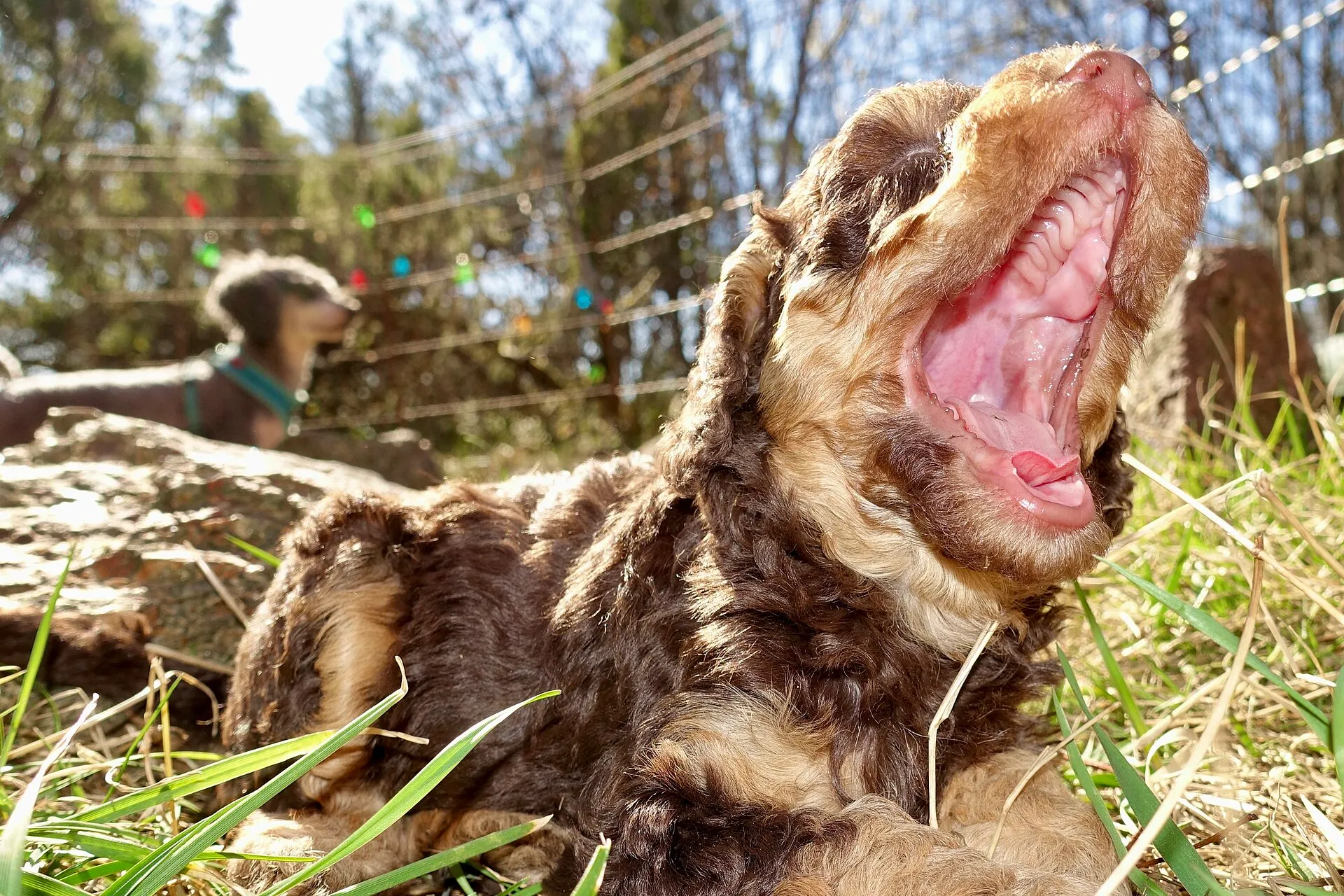
Dogs Trust says gums can be sore while baby teeth fall out from around 12 weeks, and you may notice more drooling or find tiny teeth around the house. Offer chews in different textures and talk to your vet if your puppy seems uncomfortable.
Don’t punish puppy biting
It can be tempting to tap a nose, hold a mouth shut or push a puppy away firmly. The evidence says don’t.
- The ASPCA warns that slapping, hitting, scruff-shaking and other punishment of playful mouthing can increase biting or make a puppy fearful and aggressive.
- Dogs Trust says raised voices and pushing a dog down can increase frustration and fear and damage your relationship.
- The American Veterinary Society of Animal Behavior (AVSAB) says reward-based methods should be used for all dog training, including unwanted behaviours, and that aversive methods should not be used.
One study often cited here is a 2020 paper in PLOS ONE that followed 92 companion dogs, with an average age of just under a year, at training schools in Portugal. Dogs from schools that used more aversive methods showed more stress behaviours during training and larger rises in the stress hormone cortisol, and behaved more “pessimistically” in a later test. The study wasn’t randomised and didn’t measure how well the methods worked, so it can’t prove cause. It does add weight to the vets’ advice.
Socialisation and puppy classes
Puppy classes are one of the best places to practise gentle play with other puppies, under supervision.
AVSAB says the first three months of life are the most important time for socialisation, and that puppies can generally start socialisation classes at 7 to 8 weeks. It recommends at least one set of vaccines at least 7 days before the first class, plus a first worming, with vaccines kept up to date. VCA advises choosing a class with strong hygiene rules, such as requiring vaccination records and keeping sick puppies at home.
Our puppy vaccination schedule explains which vaccines usually come when.
Puppies, children and biting
Children and puppies get each other overexcited quickly. Dogs Trust’s advice:
- Always supervise children and dogs together.
- Ask children not to run and shout around the puppy.
- Make sure everyone follows the same rules, so the puppy isn’t getting mixed messages.
Teach children to stand still “like a tree” and fold their arms if the puppy nips, then call an adult. That mirrors steps one and two above and is easy for a child to remember.
When to get help
Most puppy biting improves steadily with the routine above. Get help in these situations:
- Biting starts suddenly or gets worse. Dogs Trust advises a vet check, because pain or illness can be behind it. The same applies if things improve and then slide back.
- Biting looks different from play. The ASPCA describes signs of a temper tantrum rather than play: a stiff or frozen body, lips pulled back, growling, and much more painful bites. If that happens while you’re handling your puppy, the ASPCA advises staying calm, holding it firmly without constricting it until it settles for a second or two, then letting go and contacting a professional.
- Bites break skin or someone is hurt. Seek medical advice for the injury and contact a behaviour professional promptly.
For help, the ASPCA suggests a Certified Applied Animal Behaviorist, a veterinary behaviourist (Diplomate of the American College of Veterinary Behaviorists), or a certified trainer with proven experience of fear and aggression. In the UK, Dogs Trust runs a free Behaviour Support Line on 0303 003 6666. Elsewhere, ask your vet for a referral.
The bottom line
Puppy biting is normal, and most puppies grow out of it by around 7 months if they’ve been taught a soft mouth. Make teeth on skin end the game every time, offer toys before the bite rather than after, and protect your puppy’s sleep. Skip punishment, which tends to make things worse. If the biting changes suddenly or starts to look like fear or anger rather than play, call your vet or a qualified behaviour professional.
Questions owners ask
At what age do puppies stop biting?
Most mouthing eases once teething finishes at around 7 months, according to Dogs Trust, though it varies between dogs. Puppies that have been taught a soft mouth and given plenty of chew outlets usually improve well before that.
Should I yelp when my puppy bites?
It's one option. The ASPCA suggests a high-pitched yelp and a limp hand, no more than three times in 15 minutes, then a time-out if it doesn't work. Dogs Trust recommends staying calm and still instead. If a yelp makes your puppy more excited, drop it.
Is it okay to tap my puppy's nose or hold its mouth shut?
No. The ASPCA warns that slapping, scruff-shaking and other physical punishment can increase biting or cause fear and aggression, and the American Veterinary Society of Animal Behavior advises against aversive methods in all dog training.
Why does my puppy bite more in the evening?
Often because it is overtired. Dogs Trust links tiredness to zoomies and more mouthing, so a short calm activity followed by a nap in a quiet space usually works better than more play.
My puppy bites my children. What should I do?
Supervise every interaction, ask children not to run and shout around the puppy, and give the puppy a toy or a break in a safe space when play gets wild. If bites are hard enough to injure, contact a qualified behaviour professional promptly.
Sources
- ASPCA: Mouthing, nipping and biting in puppies
- Dogs Trust: Mouthing, nipping and puppy biting
- Merck Veterinary Manual (owner version): Dental development of dogs
- AVSAB: Position statement on puppy socialization
- AVSAB: Position statement on humane dog training (2021)
- VCA Animal Hospitals: Puppy behavior and training, socialization and fear prevention
- Vieira de Castro et al. (2020), PLOS ONE: study of aversive-based training methods and companion dog welfare
This guide is general information, not a substitute for advice from a vet who has examined your dog. Every claim is checked against the sources above. How we research and fact-check. Spotted an error? Tell us.