The short answer
- A dry, honking cough that starts a few days to two weeks after mixing with other dogs is the classic sign, and most dogs recover at home within 1–3 weeks.
- Call your vet if your dog stops eating, seems flat, has a fever or thick nasal discharge, or is a young puppy, elderly or already unwell, because those are signs of pneumonia risk.
- Keep a coughing dog away from other dogs while it coughs and for 2–3 weeks after the cough stops, since it can keep shedding germs.
- The vaccine is non-core and given yearly; it lowers the risk and severity of disease but cannot stop every infection.
- Check your kennel's or daycare's vaccine rules a few weeks before you book, because they decide what they accept and how far ahead.
Kennel cough is a contagious infection of a dog’s windpipe and airways that causes a harsh, honking cough, often with gagging or retching at the end. Most dogs stay bright, keep eating and get better at home within one to three weeks, but puppies, older dogs and dogs that are already unwell can develop pneumonia and need a vet.
The name is a little unfair to kennels. Your dog can pick it up anywhere dogs breathe on each other: daycare, training classes, shows, the vet waiting room or a busy park.
What causes kennel cough?
Kennel cough is not one germ. Vets increasingly call it canine infectious respiratory disease complex (CIRDC), because several viruses and bacteria can cause the same cough, alone or in combination.
The Merck Veterinary Manual lists the main culprits as:
- Bordetella bronchiseptica, a bacterium and the one most people have heard of
- Canine parainfluenza virus (CPIV)
- Canine adenovirus type 2 (CAV-2)
- Canine influenza virus, and less often canine distemper virus
Once viruses have damaged the airway lining, other bacteria can move in on top, which is how a simple cough turns into pneumonia. Merck also notes that stress, poor ventilation and poor nutrition make dogs more susceptible and can cause a relapse during recovery.
Canine influenza: a regional extra
Dog flu behaves like the other causes but matters more in some countries than others. According to the US CDC, the H3N8 strain was found in US dogs in 2005 but has not been reported since 2016. H3N2 was first detected in South Korea in 2007 and in the US in April 2015, and it keeps causing local outbreaks after fresh introductions from Asia. Most dogs recover within 2–3 weeks, a small percentage die, and the CDC says no human has ever been reported infected with a canine influenza virus.
How it spreads
The germs travel in droplets when a dog coughs or sneezes, by direct nose-to-nose contact, and on shared things like water bowls, toys and leads. PDSA notes it is most common where lots of dogs meet in one place.
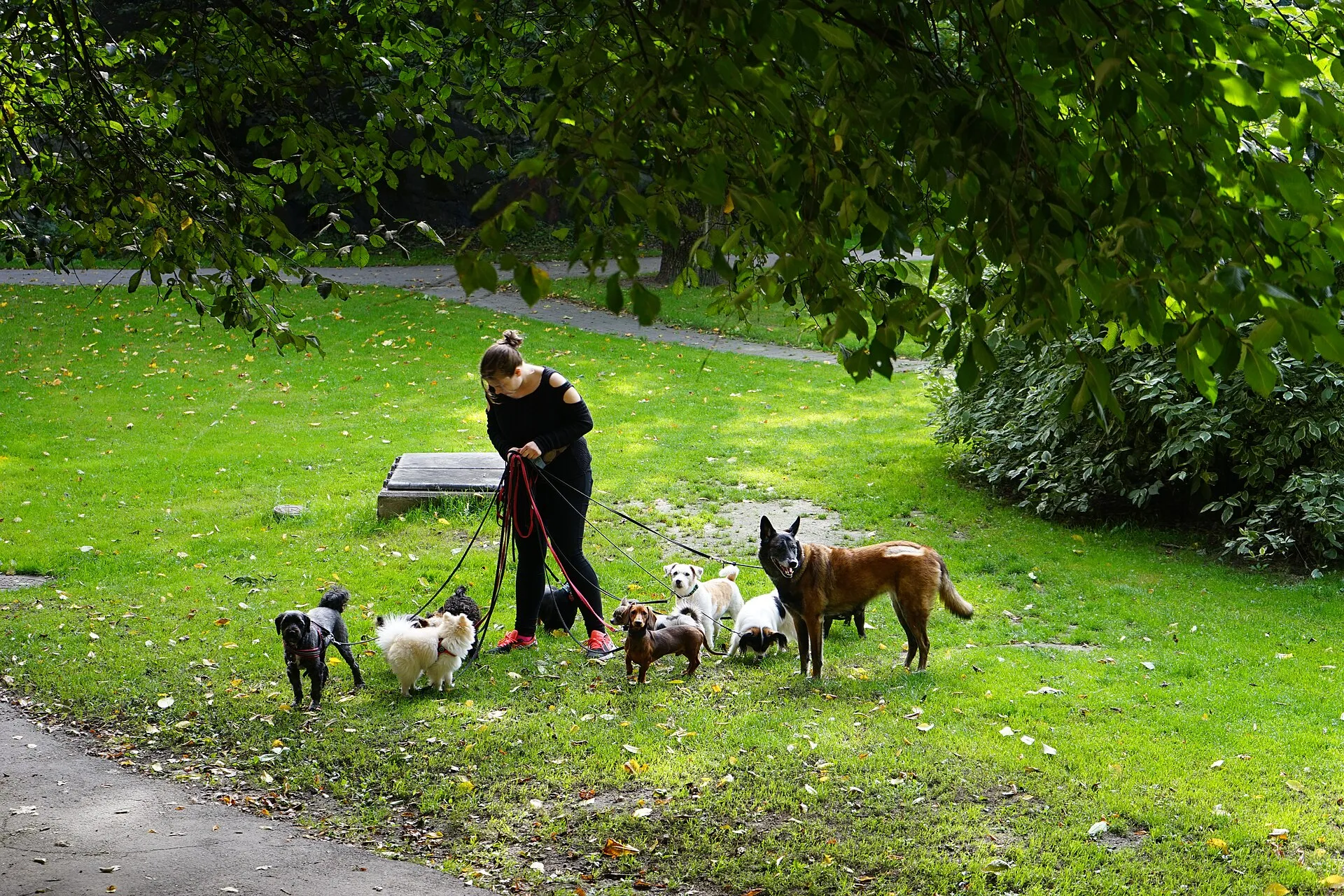
Timing catches owners out. Merck says the cough typically starts suddenly 5–10 days after exposure; PDSA gives a wider window of 3–14 days. So a dog that coughs on Friday may have caught it at daycare the week before, not at the park yesterday.
Symptoms of kennel cough
The classic picture is a dry, hacking cough that sounds like a goose honk. Many dogs finish a bout with a gag or retch, which owners often mistake for vomiting or something stuck in the throat. Merck notes the cough is easily set off by gentle pressure on the throat, so pulling on a collar often triggers a fit.
Other common signs:
- Sneezing and a runny nose
- Watery eyes or eye discharge
- A dog that otherwise seems well: eating, playing and wanting walks
Signs that suggest the infection has gone deeper into the lungs, according to Merck, include fever, thick yellow or green nasal discharge, lethargy, loss of appetite and a wet, productive cough. PDSA adds that puppies, older dogs and dogs with other illnesses are the ones most likely to get these more serious signs.
See a vet now if:
- Your dog is struggling to breathe, breathing fast at rest, or has blue or grey gums
- Your dog has stopped eating, is lethargic or feels feverish
- There is thick yellow or green discharge from the nose, or the cough has turned wet
- Your dog is a young puppy, elderly, flat-faced, or has heart or lung disease
- The cough is severe, or has lasted more than a few days without improving
Ring before you go so the practice can keep your dog away from other patients. PDSA suggests waiting outside until you are called.
Not every cough is kennel cough
A sudden honk after a dog has been at daycare is a strong clue, but coughing in dogs has other causes too, including heart and airway disease and lungworm, a parasite whose signs, according to PDSA, include coughing. That is why Merck says chest X-rays are often worth doing in dogs that are more than mildly affected: they assess severity and help rule out other causes. A vet can also swab the nose or throat for a PCR test to find out which germs are involved, which is especially useful in outbreaks.
Treatment: what vets do and what you can do at home
For most dogs, treatment is rest and time. PDSA says most dogs with kennel cough can be treated at home without medication and recover within 1–3 weeks. Merck describes the illness as usually mild and self-limiting, with severity easing in the first 5 days, though the cough can drag on for 10–20 days.
When a vet does prescribe something, it is usually one of these:
- Anti-inflammatories, to calm the airways and bring down a high temperature (PDSA)
- Cough suppressants, for a persistent, exhausting cough. Merck notes these should not be used if the dog has pneumonia, because coughing helps clear the lungs. Give them only under your vet’s direction; human cough medicines can contain ingredients that are dangerous for dogs.
- Antibiotics, only in some cases. PDSA says they are very rarely prescribed because most cases are viral, though vets may use them for very young, old or unwell dogs. Merck says they are usually unnecessary unless pneumonia is present, and ideally chosen based on a culture.
Home care that helps
- Swap the collar for a harness. Pressure on the windpipe sets off coughing fits. The AKC recommends a harness during recovery.
- Keep walks short and calm. The AKC suggests at least a week of reduced activity, then building back up gradually once the cough is easing.
- Steam or a humidifier can soothe irritated airways. A dog sitting in a steamy bathroom while you shower is a low-effort option.
- Avoid smoke, dust and sprays around the house while your dog recovers.
- Keep an eye on eating and energy. A dog that coughs but eats normally is usually on track. A dog that coughs and refuses food needs a vet.
How long to keep your dog away from others
PDSA’s advice is that dogs are most contagious while coughing and can continue to spread kennel cough for 2–3 weeks after their symptoms have cleared. Skip daycare, classes, boarding and busy parks for that time, and tell anyone whose dog yours has played with recently, especially if they have a puppy or an elderly dog.
The kennel cough vaccine
The “kennel cough vaccine” is really a set of vaccines against two or three of the germs involved: Bordetella bronchiseptica, canine parainfluenza virus and sometimes canine adenovirus type 2. The World Small Animal Veterinary Association (WSAVA), whose guidelines are used by vets worldwide, classes them as non-core, meaning they are recommended based on a dog’s lifestyle and risk rather than for every dog. WSAVA’s 2024 guidelines say they are the most widely used non-core vaccines for dogs.
The three ways it can be given
| Route | What it contains | How many doses to start | Booster |
|---|---|---|---|
| Intranasal (drops or a squirt up the nose) | Live, weakened Bordetella, with or without parainfluenza and CAV-2 | One dose; some products from 3 weeks of age | Yearly |
| Oral (squirted into the cheek pouch) | Live, weakened Bordetella, with or without parainfluenza | One dose | Yearly |
| Injection | Killed or subunit Bordetella; parainfluenza is also available as an injectable | Two doses, usually 2–4 weeks apart | Follow the product’s leaflet |
Source: WSAVA 2024 vaccination guidelines.
A few practical points from those guidelines:
- No vaccine guarantees protection. WSAVA says respiratory vaccines cannot prevent infection but may reduce disease severity. PDSA puts it the same way: it reduces the chance of infection and the severity of symptoms, but does not guarantee protection.
- Mild side effects are possible. A small percentage of dogs get a brief cough, sneezing or a runny nose or eyes after intranasal or oral vaccines. A puppy that sneezes some of the dose back out usually does not need it repeated.
- Route may matter. WSAVA notes some evidence that the intranasal route gives better clinical outcomes than the oral route, and that injected vaccines may protect differently from those given into the nose or mouth. Your vet will weigh this against how easy each route is for your dog.
- It needs repeating. Non-core vaccines generally need giving every year for reliable protection. PDSA says the kennel cough vaccine lasts 12 months.
What about canine influenza vaccines?
WSAVA recommends inactivated H3N8 and H3N2 influenza vaccines for dogs likely to be exposed through mixing with other dogs, but notes they are currently available only in the USA. Like the other respiratory vaccines, they reduce the severity and length of illness rather than preventing infection. If you live in the US and use daycare, boarding or shows, ask your vet whether local outbreaks make it worthwhile.
For how the kennel cough vaccine fits alongside the core puppy jabs, see our puppy vaccination schedule.
Boarding, daycare and vaccine requirements
Whether your dog must have the kennel cough vaccine depends on where you live and, mostly, on the business you are booking.
England. Licensed boarding kennels follow statutory guidance, last updated in June 2026. It requires an up-to-date vaccination record showing protection against parvovirus, distemper, infectious hepatitis (adenovirus), leptospirosis and “other relevant diseases”. Kennel cough vaccination is not mandatory under the guidance, but it says vaccination against diseases such as kennel cough may be needed. Other points worth knowing:
- Primary vaccine courses must be completed at least 2 weeks before a dog is accepted.
- A vet certificate of a recent protective titre test may be accepted instead of a booster, at the licence holder’s discretion.
- Vaccines must be licensed for use in the UK; homeopathic “vaccination” is not acceptable.
- Dogs showing signs of infectious disease must not use shared exercise areas and must be isolated.
Separate guidance covers home boarding and dog day care, so check which applies to your booking.
Elsewhere. We could not find one national rule for kennel cough vaccination in the US, Canada, Australia or Ireland; in practice, individual kennels and daycares set their own requirements. Many ask for it, and some specify how many days before arrival it must be given or which route they accept. Ask early, because an injected Bordetella vaccine needs two doses a few weeks apart if your dog has not had one before, and WSAVA advises restarting with two doses if a previously vaccinated dog has lapsed for a long time.
Does pet insurance cover kennel cough?
Usually yes, as an illness, if your dog has accident and illness cover and the cough did not start before the policy or during its waiting period. Vaccines themselves are routine care and normally excluded. A simple case may cost little more than a consultation, but a dog that develops pneumonia may need X-rays, swabs and hospital care, which is where cover matters. Our guide to how dog insurance works explains excesses, limits and waiting periods.
The bottom line
Kennel cough sounds dreadful but is usually a mild illness that clears in one to three weeks with rest, a harness instead of a collar, and time away from other dogs. Watch appetite and energy more closely than the cough itself: a dog that stops eating, seems flat or has thick nasal discharge needs a vet, as does any young puppy or elderly dog. The vaccine is worth having if your dog mixes with lots of others, as long as you remember it softens the illness rather than guaranteeing protection. Book it well before any kennel stay, and ask the kennel exactly what it needs.
Questions owners ask
Can my vaccinated dog still get kennel cough?
Yes. WSAVA's 2024 guidelines say respiratory vaccines cannot prevent infection but may reduce how ill a dog gets, and several germs that cause kennel cough are not in any vaccine. Vaccinated dogs that catch it usually have a milder illness.
How long is kennel cough contagious?
Dogs are most infectious while they are coughing. PDSA advises that they can keep spreading the infection for 2–3 weeks after the symptoms clear, so keep them away from other dogs, parks and daycare during that time.
Can people catch kennel cough from dogs?
For the influenza strains, the US CDC says no human infection with a canine influenza virus has ever been reported. If anyone in your home has a weakened immune system, ask your doctor and vet about Bordetella, which is mainly a dog germ.
Does my dog need antibiotics for kennel cough?
Usually not. Most cases are caused by viruses, and the Merck Veterinary Manual says antibiotics are generally unnecessary unless pneumonia develops. Your vet may still prescribe them for very young, old or unwell dogs.
How long before boarding should my dog get the kennel cough vaccine?
There is no single answer: it depends on the product and the kennel's own rules. In England, licensing guidance requires primary vaccine courses to be finished at least 2 weeks before a dog is accepted, so book the vet visit at least a few weeks ahead and ask the kennel what it needs.
Sources
- Merck Veterinary Manual: Kennel Cough (Canine Infectious Tracheobronchitis)
- WSAVA: 2024 Guidelines for the Vaccination of Dogs and Cats (Squires et al., J Small Anim Pract)
- PDSA: Kennel cough
- GOV.UK: Dog kennel boarding licensing, statutory guidance for local authorities (updated June 2026)
- US CDC: About Dog Flu (updated May 2024)
- PDSA: Lungworm in dogs
- American Kennel Club: Kennel Cough in Dogs, Signs, Symptoms, Treatment (updated June 2026)
This guide is general information, not a substitute for advice from a vet who has examined your dog. Every claim is checked against the sources above. How we research and fact-check. Spotted an error? Tell us.