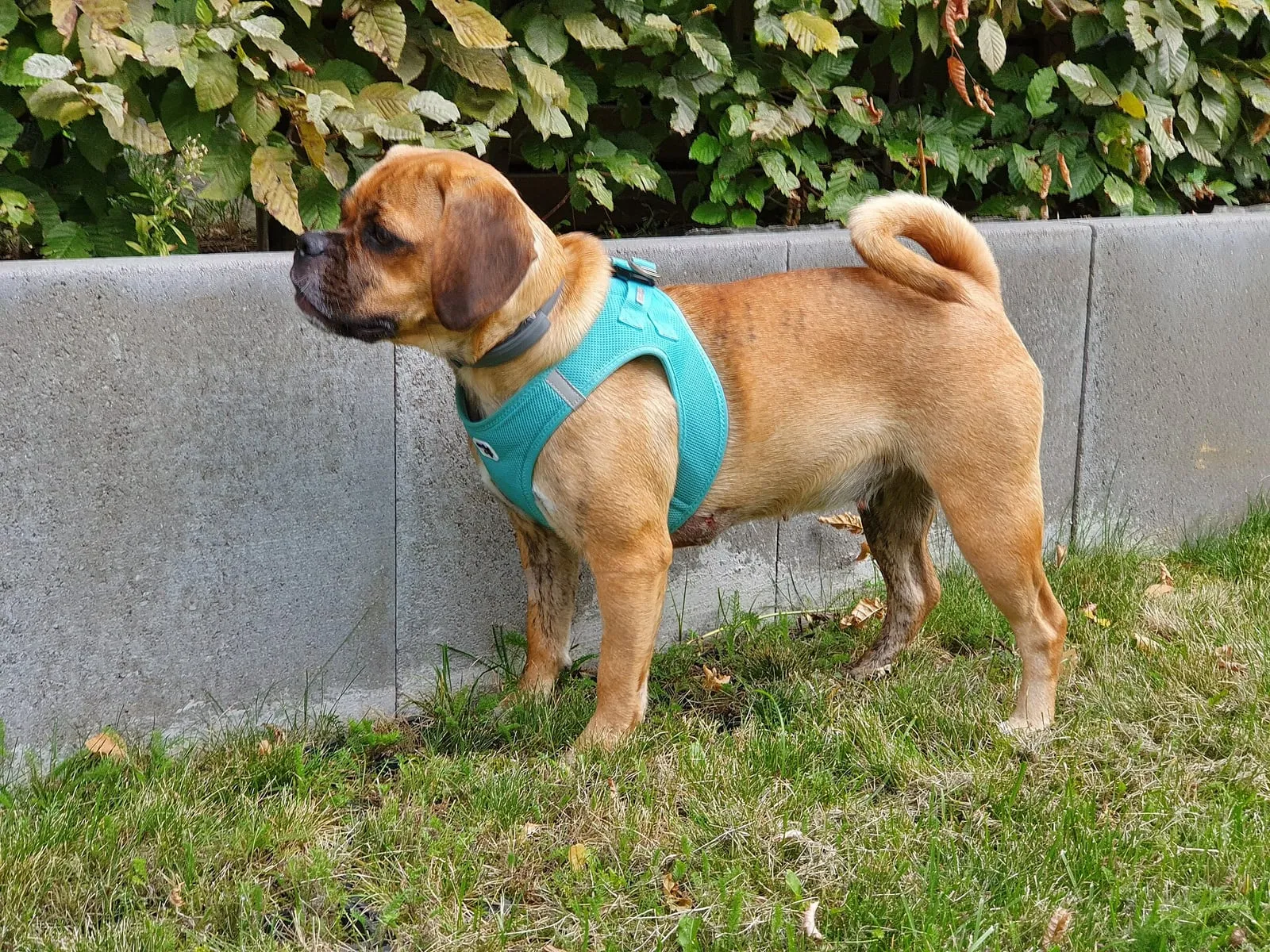
Temperament
Friendly, Playful, Curious, Vocal.
Health problems to know about
- Breathing problems in shorter-muzzled dogs
- Patellar luxation
- Hip dysplasia
- Eye disease and cherry eye
- Obesity
Ask breeders for the parents' health test results, and check what your national breed club recommends screening for.
Daily care
Daily walks and scent games, watching for heavy breathing in heat. Weekly brushing and carefully measured meals. Practise recall on a long line, as the Beagle nose often wins.
A good fit for
Families, flats or small homes with daily walks, people who want a sociable small dog.
Probably not ideal for
Close neighbours (some bay like Beagles), hot climates for shorter-muzzled dogs, owners wanting off-lead reliability.
Popularity: AKC 2025 registration rankings (US); Royal Kennel Club 2025 registrations (UK, ranked by us). Breed traits are tendencies, not guarantees. Individual dogs vary, and mixed breeds and rescues can be wonderful fits too.