The short answer
- Expect to pay for a routine scale and polish yourself unless you have a separate wellness plan or routine care add-on.
- A tooth broken in an accident is covered by most accident and illness policies, but extraction for gum disease is covered by some policies and excluded by others.
- If your policy covers dental illness, find out what dental check it requires and how often, then keep proof of every check.
- Have recommended dental work done within the deadline in your policy, which is six months on several UK policies.
- Get your dog's mouth checked before cover starts, because tartar or gum disease noted at that visit can be excluded as pre-existing.
Pet insurance almost never pays for a routine dental cleaning, because insurers class a scale and polish as preventive care, like vaccines. Tooth extractions are a different story. Most accident and illness policies cover an extraction after an injury, such as a tooth cracked on a stone, but cover for extractions caused by gum disease varies a lot, from fully covered to flatly excluded.
The difference usually comes down to three things in the policy wording: whether “dental illness” is covered at all, whether you’ve met the insurer’s dental check rule, and whether the problem was already there when cover started.
Quick answer: what’s usually covered
| Treatment | Accident and illness policy | Notes |
|---|---|---|
| Routine scale and polish | Rarely | Usually needs a wellness plan or routine care add-on |
| Extraction after an injury (fractured tooth) | Usually | Classed as an accident on most policies |
| Extraction for periodontal (gum) disease | Varies | Covered by some insurers, excluded by others |
| Other dental illness (abscess, oral tumour, stomatitis) | Often | Can carry a dental sub-limit or need a check-up history |
| Anaesthetic, X-rays, pain relief for covered work | Usually | Follow the main treatment: covered if it is |
| Cosmetic or “elective” work | No | Whitening, and on some policies crowns or root canals |
| Problems noted before cover started | No | Treated as pre-existing |
The US regulators’ body, the NAIC, lists dental care that isn’t tied to an accident or injury among the usual exclusions on pet policies. That is the default you’re trying to get around.
Accident versus illness: the line that matters
Insurers split dental problems into two groups.
Dental accidents are injuries: a canine tooth snapped on a hard chew, a tooth knocked out in a collision, a fractured jaw. These are covered on almost any accident and illness policy, and often on accident-only policies too. Healthy Paws, for example, says it covers broken or chipped teeth “whether the teeth need to be repaired or extracted”.
Dental illness covers disease: periodontal disease, tooth root abscesses, tooth resorption, gingivitis, stomatitis, oral growths. This is where policies split. Some exclude dental illness entirely, some cover it with a sub-limit, and some cover it like any other illness as long as you’ve kept up with check-ups.
Which? says some UK policies only cover dental treatment that results from an injury and won’t pay for dental costs related to illness. Those that do cover illness, it adds, usually make cover depend on the pet having dental check-ups once a year.
Why so many dental claims are about gum disease
The Royal Veterinary College calls dental disease one of the most common health problems in dogs, which is why the “illness” question matters so much. A Royal Veterinary College VetCompass study of 22,333 UK dogs seen by vets in 2016 found 12.5%, about one in eight, were diagnosed with dental disease in a single year. That figure comes from routine vet records, so it is likely an undercount; studies that examine dogs’ mouths under anaesthetic find far more disease.
Risk isn’t even across dogs. Compared with crossbreds, the breeds at highest risk in the study were:
- Toy Poodle: 3.97 times the odds
- King Charles Spaniel: 2.63 times
- Greyhound: 2.58 times
- Cavalier King Charles Spaniel: 2.39 times
Dogs under 10 kg (22 lb) had 3.07 times the risk of dogs weighing 30–40 kg (66–88 lb), and dogs aged 12 or over had 3.91 times the risk of dogs aged two to four. If you have a small, older dog, a policy that excludes dental illness is excluding one of the most likely claims you’ll make.
How different insurers handle dental disease
These examples show how wide the range is. They describe each insurer’s own published pages at the time of writing; always check the policy wording you’ll actually be sold.
Covered as an illness, with conditions (UK example)
Petplan in the UK covers dental injury and illness as standard, provided your dog had a vet dental examination in the 12 months before the problem started and you follow any treatment your vet recommends within a set period. Its main page says six months; an FAQ on the same page says three, so ask for the exact deadline in writing. Routine descaling is not covered.
Gum disease excluded, other dental illness covered (US example)
Healthy Paws covers accidental tooth damage and some dental illnesses, including dentigerous cysts, stomatitis and malocclusion. Its exclusions list “cleanings, and extractions and reconstructions due to dental disease”, and it excludes claims arising from a lack of preventive dental care, naming periodontal disease from insufficient brushing and retained baby teeth. It also won’t pay for a cleaning done alongside covered treatment, or for the exam fee.
Gum disease covered, no check-up rule (US example)
Pumpkin says its plans cover dental illnesses, including periodontal disease, and tooth extractions for dental accidents or illnesses. It says it doesn’t require an annual teeth cleaning to keep that cover. Routine cleanings, crowns, fillings, root canals and implants are excluded.
Sub-limits and optional dental cover (Australia)
CHOICE, the Australian consumer group, says dental illness is a common exclusion in Australian policies, that some insurers offer it as optional extra cover, and that many policies set a separate sub-limit for dental illness. If your breed is prone to dental problems, CHOICE suggests looking for a policy with a high dental illness limit. Its guide was last updated in 2021, so check current Product Disclosure Statements.
The annual dental check rule, and how claims get declined
This is the clause that catches most people out. A typical example comes from a UK Financial Ombudsman Service decision published in February 2025. The policy covered dental treatment “so long as there is a history of annual check-ups. If not annual, then as recommended by your vet. We would need proof that any advice given has been followed within 6 months.”
The pet in that case was an indoor cat that hadn’t had a check-up since 2019. When it needed teeth removed in late 2023, the insurer declined the dental claim. The ombudsman agreed the terms were clear and typical of other pet policies, so the dental treatment stayed excluded. It did tell the insurer to reassess the claim for an infection that followed the procedure, because the treatment, not the dental disease, had caused it.
The lessons carry straight over to dogs:
- A vaccination visit only counts if the vet examines and records the teeth. Ask for it.
- If your vet recommends dental work, book it within your policy’s deadline, then keep the invoice.
- If your vet says a longer interval is fine, ask them to write that in the notes.
- Insurers check the clinical history at claim time, so a missing year can be enough to decline.
What dental work costs if you’re not covered
Prices vary a lot by country, clinic, dog size and how many teeth come out. These are published figures, not quotes.
United States
- A 2025 Synchrony cost study, published by CareCredit, put the average routine dental cleaning at $379 and dental X-rays at $187. It gave $78 per tooth for a simple extraction (range $62–$142) and $130 per tooth for a complex one. Those extraction figures include an exam but not necessarily anaesthetic, X-rays or the cleaning.
- PetMD, updated October 2025, gives $350–$500 for a cleaning at a general practice, about $1,500 with a veterinary dental specialist, and $500–$2,500 per tooth for extractions.
- Pumpkin’s own claims data for October 2022 to October 2025 shows dog tooth extraction bills of $1,220–$3,985 and an average periodontal disease claim of $1,106.
United Kingdom
The Royal Veterinary College’s general practice fees, from August 2026, show what a London teaching hospital charges:
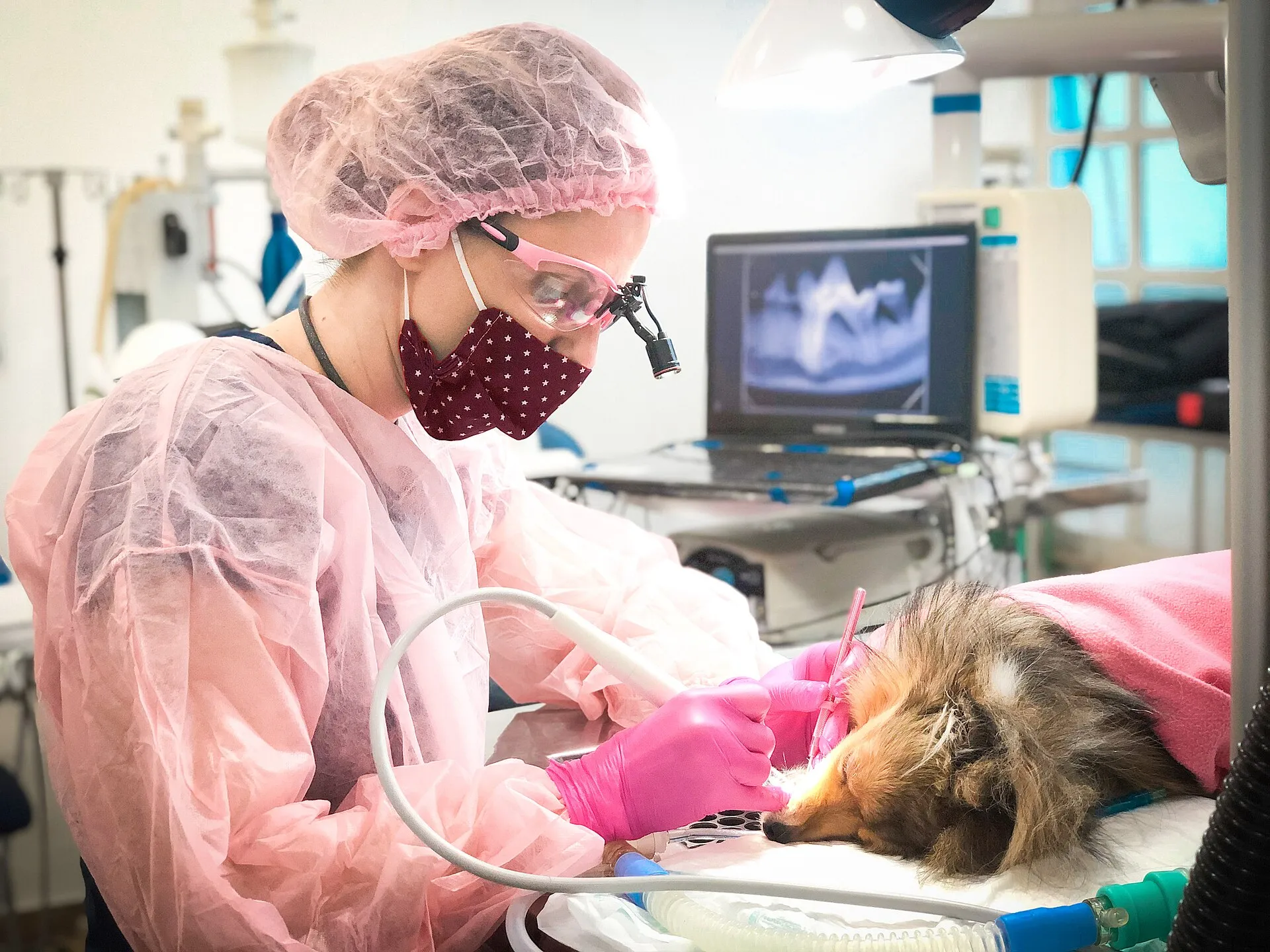
- Dental assessment, scale and polish under general anaesthetic: £515 for dogs under 25 kg (55 lb), £565 over 25 kg
- Extractions added to that: £480 for one to four teeth, £690 for five to nine, £850 for ten or more, including X-rays and pain relief
- A £60 health check if the dog hasn’t been seen in the previous six months
For Australia, Canada, Ireland and elsewhere, ask your vet for a written estimate; we couldn’t find comparable published national figures.
The gap between a routine clean and a mouth full of extractions is why prevention pays. Our dog dental care guide covers brushing and chews that work.
Pre-existing dental disease
If tartar, gingivitis, a broken tooth or bad breath is noted at a vet visit before your policy starts, many insurers will treat later dental disease as pre-existing. Pumpkin, for example, states plainly that its policies don’t cover pre-existing conditions, though some cured conditions can be reconsidered after a symptom-free period. Healthy Paws says a condition only qualifies if there were no signs before enrolment or during the waiting period.
Two practical steps help:
- Insure while your dog is young and the mouth is clean.
- If you’re buying cover for an older dog, consider getting a dental treatment done first so the insurer sees a healthy mouth from the start. It may still be excluded, but you’ll know where you stand.
Our guide to pre-existing conditions and pet insurance explains how insurers decide what counts.
Why anaesthetic-free cleaning won’t help your claim
Some groomers and clinics offer “anaesthesia-free” teeth cleaning. PetMD notes that the American Animal Hospital Association and the American Veterinary Dental College do not recommend it, because scraping visible tartar while the dog is awake can’t reach below the gumline, where periodontal disease does its damage, and doesn’t allow X-rays or a full exam. It also won’t produce the kind of clinical record an insurer looks for.
Questions to ask before you buy
Put these to any insurer and ask for the answers in writing:
- Is dental illness covered, or only dental accidents?
- Is periodontal disease specifically excluded?
- What dental check do you require, how often, and must it be done by a vet?
- How long do I have to complete recommended dental work?
- Is there a separate dental limit, and is it per year or for the life of the policy?
- Are extractions, X-rays and anaesthetic covered when the underlying treatment is?
- Is a cleaning covered if it’s part of treating a covered condition?
If a dental claim is ever declined, our guide on how to make a pet insurance claim and avoid rejection walks through appeals and complaints.
The bottom line
Don’t buy pet insurance expecting it to pay for routine cleaning; budget for that separately or use a wellness plan. Do buy it with dental illness in mind, especially for small breeds, Toy Poodles, spaniels and Greyhounds, because gum disease is one of the most common problems vets treat. The policy that covers periodontal disease, with a check-up rule you can actually keep, is worth more than a cheaper one that only pays for broken teeth. Keep every dental check on record and act on your vet’s advice within the deadline, and your claim has a much better chance of being paid.
Questions owners ask
Does pet insurance pay for anaesthetic and X-rays during dental work?
When the dental treatment itself is covered, the anaesthetic, X-rays, medication and hospital care that go with it are usually covered too. Healthy Paws and Pumpkin both list these as eligible costs. If the dental work is excluded, those costs are excluded with it.
Will insurance cover a cleaning if my dog is under anaesthetic for a covered extraction anyway?
It depends on the insurer. Pumpkin says it can pay for a cleaning when it's part of treating a covered illness. Healthy Paws excludes a cleaning or polish even when it's done alongside covered treatment. Read the dental section of your own policy for the answer.
Is gum disease a pre-existing condition?
It can be. If a vet noted tartar, gingivitis or loose teeth before your policy started or during the waiting period, many insurers will exclude dental disease linked to those findings. A clean dental check at the start of cover is your best protection.
My indoor dog rarely sees the vet. Does the annual check rule still apply?
Yes, on policies that have one. In a February 2025 decision, the UK Financial Ombudsman Service agreed an insurer could decline dental treatment for an indoor pet that had gone years without check-ups, because the policy terms clearly required them.
Are dental wellness plans worth it?
They can help spread the cost of a yearly clean, but they aren't insurance. Compare the yearly price of the plan against what your vet charges for a scale and polish, and check whether the plan has its own waiting period.
Sources
- Which?: Pet insurance explained (December 2025)
- Petplan UK: Pet dental insurance
- Financial Ombudsman Service: Decision DRN-5323280 (Pinnacle Insurance, dental claim, February 2025)
- Healthy Paws Pet Insurance: Dental health coverage and exclusions
- Pumpkin: Pet insurance dental coverage 101
- NAIC: Pet Insurance: It Could Save Your Pet's Life, Could Save You Money
- CHOICE: Do you need pet insurance? (updated October 2021)
- CareCredit: Dog teeth extraction cost and procedure guide (2025 Synchrony cost study, February 2026)
- PetMD: How much does dog teeth cleaning cost? (October 2025)
- Royal Veterinary College: General practice fees (from August 2026)
- Royal Veterinary College VetCompass: New RVC research gets to the root of dental disease in dogs (2021)
This guide is general information, not a substitute for advice from a vet who has examined your dog. Every claim is checked against the sources above. How we research and fact-check. Spotted an error? Tell us.