The short answer
- Treat every dog and cat in the household with a vet-recommended product at the same time, not just the one that is scratching.
- Wash pet bedding and vacuum carpets, furniture and car seats often, because eggs, larvae and pupae live in the home rather than on the dog.
- Expect to see the odd new flea for up to eight weeks and keep treating for at least three months, since pupae keep hatching after the adults are dead.
- Never put a dog flea product on a cat; permethrin, found in some dog treatments, can kill cats.
- Ask your vet how often your dog needs flea treatment where you live, and whether a tablet or spot-on suits your dog's lifestyle.
To get rid of fleas on a dog for good, treat every dog and cat in the house with an effective vet-recommended product, clean and treat your home at the same time, and keep going for about three months. The adult fleas on your dog are only part of the problem. Eggs, larvae and pupae develop in carpets, bedding and furniture, and they keep producing new fleas long after the first dose has worked.
How to tell if your dog has fleas
Scratching, nibbling and licking, especially around the lower back, the base of the tail and the back of the thighs, are the classic signs. Those are the areas the Merck Veterinary Manual describes for flea allergy dermatitis, where a dog reacts to proteins in flea saliva. Allergic dogs can be miserable with very few fleas on them, so not finding fleas doesn’t rule them out.
To check:
- Stand your dog on a pale towel or sheet.
- Run a fine-toothed flea comb through the coat along the back and around the tail base.
- Look for small, fast, reddish-brown insects, and for black specks.
- Tip the specks onto damp white kitchen paper. Flea dirt, which is digested blood, is reddish-black and turns reddish-brown as it gets wet. Ordinary dirt stays grey or black.
Fleas are common. In a UK survey of 326 vet practices in 2018, 14.4% of dogs and 28.1% of cats checked had fleas, and more than 90% of the fleas on both were cat fleas (Ctenocephalides felis). The Companion Animal Parasite Council (CAPC) says the cat flea is also the most common external parasite of dogs and cats in North America, though it is uncommon in very dry regions where humidity stays below 50%.
The flea life cycle, and why you keep seeing fleas
Understanding the cycle explains almost every “it didn’t work” complaint.
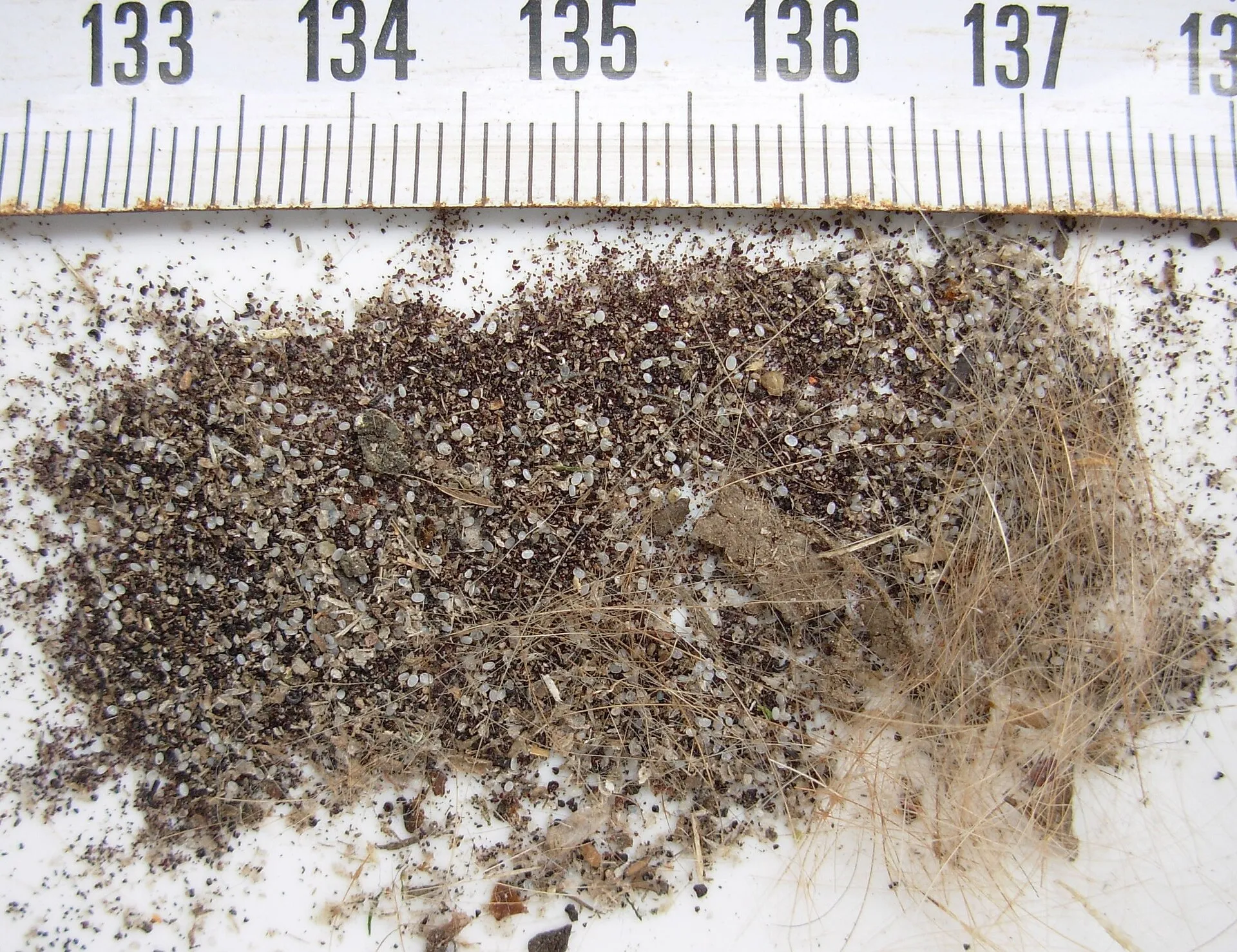
- Adults start feeding within minutes of landing on a dog. Females begin laying eggs within one to two days of the first meal: CAPC says 20–24 hours, Merck says 24–48 hours. At peak, a female lays 40–50 eggs a day, and adults typically live two to three months on the host.
- Eggs are smooth and drop off within hours, so they end up wherever your dog sleeps, lies and shakes. Merck says they hatch in about 1–6 days.
- Larvae hide from light deep in carpet pile, under furniture, in bedding and in shaded corners outside. They feed on flea dirt and develop over 5–11 days, sometimes two to three weeks.
- Pupae develop inside a cocoon in carpets, bedding, soil and vegetation. CAPC notes that pupae can stay dormant for up to 30 weeks in cool conditions. Warmth, vibration, pressure and carbon dioxide from a passing animal trigger them to hatch.
In a typical home, the whole cycle takes about 3–8 weeks, according to Merck. That is why fleas seem to “come back” a few weeks after a treatment. They are new adults hatching from pupae that were already there.
Step 1: Treat every pet in the house
CAPC is clear that every dog and cat in the household must be treated, not just the one scratching. An untreated cat keeps the eggs coming.
Your vet can match a product to your dog’s age, weight, health, lifestyle and the other animals at home. The main product types Merck lists for dogs:
| Product type | Examples (active ingredients) | How it’s given | Typical interval |
|---|---|---|---|
| Isoxazolines | afoxolaner, fluralaner, lotilaner, sarolaner | Chewable tablet (fluralaner also as spot-on) | Usually monthly; fluralaner every 12 weeks |
| Spinosyns | spinosad | Tablet | Monthly |
| Neonicotinoids | imidacloprid, dinotefuran; nitenpyram | Spot-on; nitenpyram tablet | Monthly; nitenpyram is a short-acting quick kill |
| Phenylpyrazoles | fipronil | Spot-on | Monthly |
| Macrocyclic lactones | selamectin | Spot-on | Monthly |
| Pyrethroids | flumethrin | Collar | About eight months |
| Growth regulators and development inhibitors | S-methoprene, pyriproxyfen, lufenuron | Often combined with an adult-killer | Monthly |
A few practical points:
- Speed differs. Merck says tablets that work through the bloodstream (isoxazolines, spinosad, nitenpyram) can kill most fleas within about 12 hours, while topical products may take 12–36 hours.
- Growth regulators break the cycle. Products such as methoprene and pyriproxyfen stop eggs hatching and larvae developing. They don’t kill adult fleas, so they are usually paired with something that does.
- Old-style treatments can fail. Merck lists insecticide resistance, underdosing, late doses and washing products off as reasons for failure, so a cheap product that “never works” may genuinely not suit your fleas.
- Isoxazolines and the nervous system. The US FDA (fact sheet updated 2023) says these products are safe and effective for most dogs and cats, but some animals have had muscle tremors, wobbliness or seizures, including animals with no history of seizures. Tell your vet if your dog has ever had a seizure.
Use the product exactly as labelled for your dog’s weight band, and only under your vet’s direction if you’re combining products or treating more often than the label says.
Keep dog products away from cats
Some dog flea treatments contain permethrin, which is highly toxic to cats. International Cat Care explains that cats can’t break it down, so even a small amount can cause twitching, tremors, wobbliness and seizures. Most cases happen when an owner puts a dog product on a cat, but cats can also be poisoned by cuddling up to a recently treated dog.

If you have a cat, choose a dog product without permethrin. If you do use one, International Cat Care advises keeping the animals apart for 72 hours. Check the active ingredients on anything bought online, because many listings don’t show them. If you’re unsure whether something your pet has touched is dangerous, our Is it toxic? checker and your vet are good first stops.
Step 2: Treat the home
Eggs, larvae and pupae all develop off the dog, in the places it sleeps and lies. Merck’s advice on the mechanical side:
- Wash pet bedding and any throws your dog lies on, and keep washing them during the treatment period.
- Vacuum often, including under furniture, along skirting boards, sofa cushions and car seats. Vibration also coaxes pupae to hatch, which exposes the new adults to the treatment on your dog.
- Flea traps can show you whether numbers are falling.
For heavier infestations, Merck suggests a household spray that combines an adult-killing insecticide with a growth regulator such as methoprene or pyriproxyfen. Focus on carpets, cracks and areas under furniture, and repeat 7–10 days later for severe problems. Follow the label, keep pets and people out of treated rooms for as long as it says, and check that the product is safe for any cats, fish or other pets in the home.
Outdoors, Merck says treating open, sunny lawns is not useful because larvae can’t survive there. If your dog has favourite shady spots, such as under decking, a porch or shrubs, those are the areas that matter.
Step 3: Keep going for long enough
This is where most flea battles are lost. Merck says that even with a product that kills 100% of fleas on the dog, full control of an infestation typically takes two to three months, because of the eggs, larvae and pupae already in the home. You may see the odd live flea for up to eight weeks, since newly hatched fleas jump on and take some hours to die.
After that, prevention is about keeping your dog protected. CAPC recommends treating all dogs and cats year-round for life. In the UK, the British Veterinary Association (BVA), with BSAVA and BVZS, takes a different line. Its position, first published in 2021 and updated in 2025, asks vets to assess each animal’s risk instead of treating every pet routinely, because of growing evidence that these products pollute the environment. The honest answer is that vets in different countries disagree, so ask yours what makes sense for your dog’s lifestyle, your local climate and the other animals at home.
Flea treatments and the environment
The BVA’s concern is backed by measurements. In the UK, fipronil and imidacloprid have been found in surface waters at levels that can harm aquatic life. A 2024 study of 98 treated dogs found both chemicals in every wash-off sample. Bathing released up to 16.8% of the applied imidacloprid and 24.5% of the applied fipronil. Owners’ handwashing was the largest source across the population, continuing for at least 28 days after a spot-on was applied.
You can cut your share without leaving your dog unprotected:
- Ask your vet whether a tablet or a spot-on suits your dog better; the BVA suggests vets avoid topical products for dogs likely to swim or be bathed
- Keep a freshly treated dog out of rivers and ponds, and follow the label on bathing
- Don’t treat more often than your vet recommends
Fleas can carry tapeworm and other infections
Fleas are more than an itch. CAPC and Merck note that cat fleas can transmit the tapeworm Dipylidium caninum, which dogs pick up by swallowing a flea while grooming, and Bartonella bacteria. Heavy infestations can cause anaemia, especially in puppies. In the 2018 UK survey, 11.3% of pooled flea samples tested positive for Bartonella species and 3% for Dipylidium.
Ask your vet whether your dog needs a tapeworm treatment alongside the flea plan. Flea allergy is also one of the most common causes of itchy skin; our guide to itchy dogs and skin allergies covers the other usual suspects. If you’re tackling ticks at the same time, see our guide to ticks on dogs.
See a vet now if:
- Your puppy or small dog has lots of fleas and seems weak, or the gums look pale
- Your dog has open sores, hot spots or skin that smells or oozes from scratching
- Your dog trembles, wobbles or has a seizure after a flea treatment
- A cat in your home has been treated with a dog product, or is twitching or trembling after contact with a treated dog
- You’ve treated every pet correctly for three months and still have fleas
The bottom line
Fleas are beaten by patience more than by a single magic product. Treat every pet in the house with something your vet recommends, clean and treat the home to tackle the eggs and pupae, and expect stragglers for up to two months. Keep dog products well away from cats. Then agree a long-term plan with your vet that suits where you live and how your dog spends its days.
Questions owners ask
Why does my dog still have fleas after treatment?
Usually because new fleas keep hatching from pupae in the home and the garden. Most products don't repel fleas, so newly hatched fleas jump on and die later. Seeing a few for up to eight weeks is normal; fleas after that point mean something is being missed, such as an untreated pet or a lapsed dose.
Can dog fleas live on humans?
Cat fleas, which make up most fleas on dogs, do bite people. CAPC notes that newly emerging fleas bite people in infested homes, which is a good sign the home itself needs treating, not just the dog.
Can I get rid of fleas without treating the house?
It is possible with a fast-acting product used on every pet for long enough, but it is slower. Cleaning and treating the home cuts the number of fleas waiting to hatch, which shortens the miserable phase.
Does a bath get rid of fleas?
A bath washes some adult fleas off, but it does nothing about the eggs, larvae and pupae in your home. It can also wash off a spot-on product, so check the label and ask your vet about timing.
Sources
- Merck Veterinary Manual: Fleas in Dogs and Cats
- Merck Veterinary Manual: Flea Allergy Dermatitis in Dogs and Cats
- Companion Animal Parasite Council (CAPC): Fleas
- Abdullah S, Helps C, Tasker S, Newbury H, Wall R (2019), Parasites & Vectors: Pathogens in fleas collected from cats and dogs in the UK
- US FDA: Fact Sheet for Pet Owners and Veterinarians about Potential Adverse Events Associated with Isoxazoline Flea and Tick Products
- International Cat Care: Permethrin Poisoning
- BSAVA: Update to the BVA, BSAVA and BVZS Responsible Use of Parasiticides Policy Position (October 2025)
- Science of the Total Environment (2024): Down-the-drain pathways for fipronil and imidacloprid applied as spot-on parasiticides to dogs
This guide is general information, not a substitute for advice from a vet who has examined your dog. Every claim is checked against the sources above. How we research and fact-check. Spotted an error? Tell us.