The short answer
- Rule out fleas first, even if you can't see any, because allergic dogs often groom the evidence away.
- Note when the itching happens: seasonal itch points to pollens, year-round itch to dust mites, food or both.
- Skip blood tests and home kits for food allergy; a strict elimination diet of at least 8 weeks is the only reliable way to diagnose it.
- Treat infections and flare factors as well as the allergy, since skin and ear infections keep the itch going.
- Expect to manage atopic dermatitis for life, with a plan you adjust over time rather than a one-off cure.
Most itchy dogs are reacting to one of three things: flea bites, allergens in the environment such as pollen and house dust mites (atopic dermatitis), or, less often, something in their food. Skin infections and mites can cause or worsen the itch too. What helps depends on the cause, so the first job is working out which one you’re dealing with, starting with fleas.
The Merck Veterinary Manual puts it bluntly: itching is a sign, not a diagnosis. By the time a dog is chewing its feet raw, the original trigger may be gone and a secondary bacterial or yeast infection may be doing the work.
Is this normal scratching?
Every dog scratches. The UK charity PDSA says it isn’t normal if it happens regularly more than four or five times a day, or if it causes other problems such as bald patches, red skin, sores, dark thickened skin or saliva staining (rust-brown fur on paws and around the mouth from constant licking). Some dogs scratch and lick in private, so check their skin and feet as well as watching.
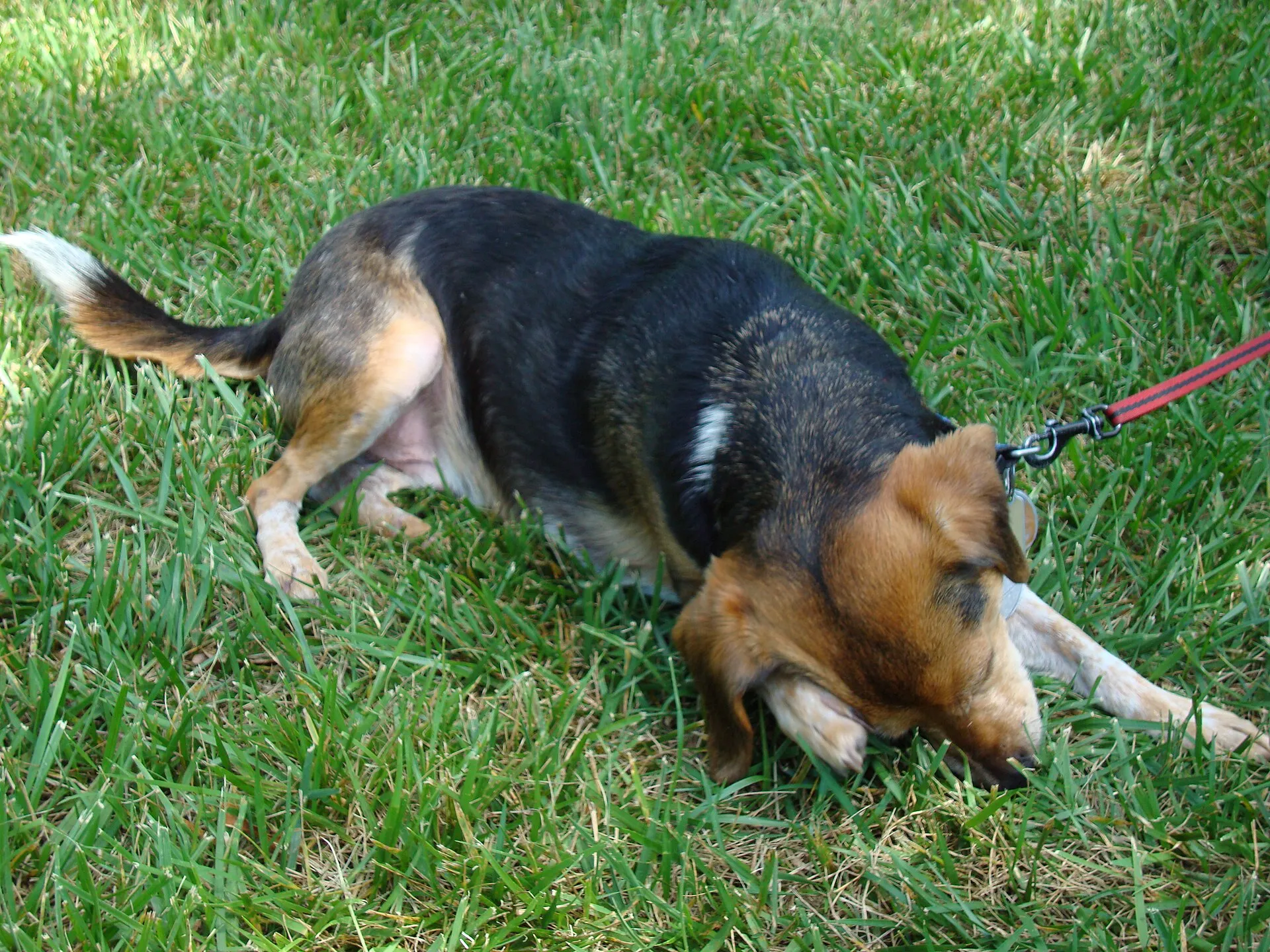
Where a dog itches is a useful clue:
| Pattern | Most likely cause |
|---|---|
| Lower back, base of the tail, back of the thighs | Flea allergy |
| Paws, face, ears, front legs, belly | Environmental allergy (atopic dermatitis) or food allergy |
| Same areas, but no change across seasons | Food allergy, or dust-mite allergy |
| Worse in spring and summer, better in winter | Seasonal pollen allergy |
| Ear infections that keep coming back | Any allergy; sometimes the only sign |
These patterns overlap a lot, and many allergic dogs have more than one allergy. Treat the table as a starting point for a conversation with your vet, not a diagnosis.
Cause 1: fleas and flea allergy dermatitis
Many dogs are allergic to the saliva fleas inject when they feed, and even non-allergic dogs scratch at the bites. Merck lists crusted, itchy skin over the hips, base of the tail and thighs as the classic signs, often with hair loss, scabs and secondary infection. Flea allergy usually peaks in late summer and is uncommon in dogs under a year old.
The catch is that very sensitive dogs often have almost no fleas on them, because they groom them off. So “I’ve never seen a flea” doesn’t rule it out. Two quick checks:
- Part the fur along the back and near the tail and look for moving fleas or flea dirt, which looks like black, comma-shaped specks.
- Do the wet paper test. Put the specks on a damp paper towel. Flea dirt is digested blood, so it dissolves into a reddish-brown smear.
Treating only the dog often fails. Merck explains that flea eggs drop off into bedding, carpets and soil, and that adult fleas can wait inside their cocoons for weeks, even up to a year, before hatching. Most fleas complete their life cycle in three to eight weeks, so a dog can keep getting re-bitten for months unless every pet in the house is treated consistently. Our guide to fleas on dogs covers prevention products and treating the home.
Vets rule out parasites first for good reason. The ICADA guidelines (2015), written by the International Committee on Allergic Diseases of Animals, recommend flea combing, skin scrapings for mites and skin cytology as part of the work-up before an allergy diagnosis is made.
Cause 2: environmental allergy (atopic dermatitis)
Atopic dermatitis is an inherited tendency to react to things in the environment such as pollens, moulds and house dust mites. According to Merck, it usually starts between six months and three years of age. The feet, face, ears, front legs and belly are most often affected, and around 15% of affected dogs also get inflamed noses or asthma-like signs.

Merck lists breeds with a higher risk, including the Chinese Shar-Pei, Wirehaired Fox Terrier, Golden Retriever, Dalmatian, Boxer, Boston Terrier, Labrador Retriever, Lhasa Apso, Scottish Terrier, Shih Tzu and West Highland White Terrier. Any dog, mixed breeds included, can be affected.
There’s no blood or skin test that proves a dog has atopic dermatitis. Vets diagnose it from the history and pattern of signs, after ruling out fleas, mites, infection and food allergy. Allergy tests (blood or intradermal skin tests) come afterwards, and their job is to identify which allergens to put in an allergy vaccine, not to confirm the diagnosis.
Recurrent ear infections can be the only sign in a small number of dogs. If your dog’s ears flare every few months, read our guide to dog ear infections and ask your vet whether allergy is behind them.
Cause 3: food allergy
Food allergy is real but less common than environmental allergy. A systematic review by Olivry and Mueller (2017) found it in 1–2% of all dogs seen by vets, but in 9–40% of dogs presented for itching and 9–50% of dogs diagnosed with atopic dermatitis. In other words, food is worth ruling out in any dog with ongoing itch, and some dogs have both.
The main clue is that food-allergic itch doesn’t change much with the seasons. Merck notes a possibly higher risk in Labrador Retrievers, West Highland White Terriers and Cocker Spaniels.
Which foods? A 2016 review of the evidence found the most common culprits in dogs were beef, dairy products, chicken and wheat. Merck’s owner guide gives a broader list: beef, chicken, eggs, corn, wheat, soy and milk. Either way, the allergy is to a protein your dog has already eaten, which is why switching from one chicken-based kibble to another rarely helps.
Why the tests don’t work
Blood tests for food-specific antibodies showed low repeatability and highly variable accuracy in dogs, according to a 2017 review by Mueller and Olivry. Merck agrees that blood and skin tests aren’t reliable for food allergy. Hair and saliva kits sold directly to owners weren’t among the methods with published evidence in that review. Save your money for the diet trial.
The elimination diet, step by step
An elimination diet is boring, strict and the only reliable test for food allergy. It works like this:
- Pick the diet with your vet. Either a prescription hydrolysed diet (proteins broken down so the immune system doesn’t recognise them) or a diet built around a protein and carbohydrate your dog has never eaten.
- Feed nothing else. Merck stresses that this includes treats, chews, table scraps, flavoured medicines and flavoured toothpaste. One slice of ham from a visiting relative can spoil weeks of work.
- Keep going for at least 8 weeks. A 2015 review found that by 5 weeks more than 80% of food-allergic dogs had improved, and extending to 8 weeks caught more than 90%. Merck’s owner guide allows up to 3 months.
- Treat infections alongside. Your vet may prescribe antibiotics or antifungals so infection doesn’t muddy the result.
- Challenge to confirm. If the itch improves, reintroduce the old food. Merck says signs usually return within 1 hour to 14 days if food allergy is the cause. Then you can test single ingredients to find the culprit.
The challenge step feels cruel when your dog is finally comfortable, but without it you can’t tell food allergy from a lucky change in season.
What actually helps
Treatment works best when it targets the cause and the things that make the itch worse. The ICADA guidelines (2015) recommend combining several approaches rather than relying on one drug.
Remove the trigger where you can. Year-round flea control for every pet, strict avoidance of a proven food allergen, and reducing exposure where practical.
Treat infections. Merck says vets often prescribe a 21- to 30-day course of antibiotics if a bacterial skin infection is suspected. If the itch disappears, infection was the main problem. If it only partly improves, an allergy is likely underneath.
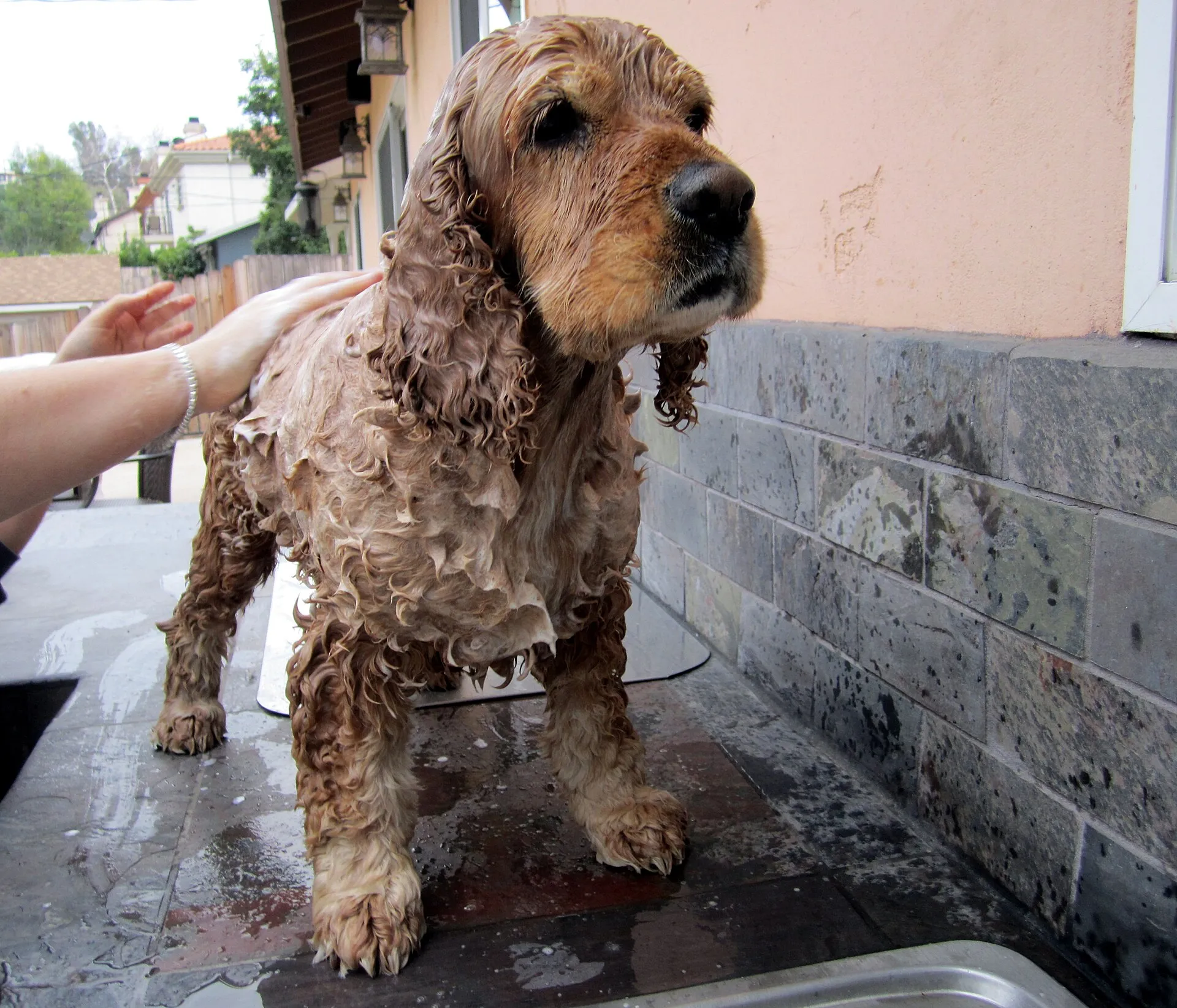
Look after the skin. The ICADA guidelines include bathing with mild shampoos and good skin and coat care, possibly with more frequent bathing and extra essential fatty acids. Merck adds that fatty acids are rarely effective on their own, but may help over the long term.
Anti-itch medicines, under your vet’s direction. For atopic dermatitis, the ICADA guidelines rate topical and oral glucocorticoids (steroids), oral ciclosporin and oral oclacitinib as the most effective options for reducing itch and skin lesions. These guidelines date from 2015, and newer drugs have been licensed since, so ask your vet what is available where you live. Steroids work well but can cause increased hunger, thirst and urination and, used long term, more serious side effects, so Merck says they’re used only in limited circumstances. Antihistamines are popular but, per Merck, current research doesn’t support them for itch relief in dogs. Never give your dog human allergy medicine without your vet’s say-so.
Allergy immunotherapy. For environmental allergies, allergen-specific immunotherapy (injections or drops tailored to the dog’s allergy test results) is the preferred treatment of most veterinary dermatologists, according to Merck. It’s slow: improvement may not show for 6 months, and it can take a year to judge. The ICADA guidelines name it as one of only two interventions likely to prevent or delay flare-ups.
See a vet now if:
- Your dog has broken, oozing, bleeding or foul-smelling skin
- A patch of skin is hot, swollen and painful (a “hot spot”) and spreading fast
- Your dog’s face, lips or eyelids swell suddenly, or they develop hives
- Your dog is shaking its head constantly, tilting it, or has a smelly ear discharge
- The itch is stopping your dog sleeping or eating
- Your dog seems unwell, lethargic or feverish as well as itchy
What allergies cost over a lifetime
Allergies are rarely expensive in a single visit but add up because they’re lifelong. Trupanion’s 2019 breed-by-breed claims data put the average annual cost of allergy claims, in US dollars, at $100–200 for Boston Terriers and Shih Tzus and $300–500 for German Shepherds, before any allergy testing or immunotherapy. UK and other costs vary by practice; ask for an estimate for the diagnostic work-up and the first year of treatment.
Because these conditions recur, the type of insurance matters. Policies that cover a condition only for 12 months, or up to a fixed amount, can stop paying for allergies long before your dog stops itching. Allergies noted before you buy cover are normally excluded. Our insurance guide explains the different policy types.
The bottom line
Start with fleas, because they’re common, treatable and easy to miss. If the itch persists, work through infection and food allergy with your vet; an elimination diet lasting at least 8 weeks is the only reliable food test. Environmental allergy is diagnosed once those are ruled out and is managed for life, usually with a mix of skin care, flare control and medication or immunotherapy. A clear diagnosis is cheaper in the long run than years of guessing.
Questions owners ask
How much scratching is normal for a dog?
The PDSA says scratching isn't normal if it happens regularly more than four or five times a day, or if it causes other signs such as bald patches, red skin, sores or saliva-stained fur. Some dogs scratch and lick in private, so look for the evidence too.
Do antihistamines work for itchy dogs?
Not reliably. The Merck Veterinary Manual says their success is highly variable and current research doesn't support using them for itch relief in dogs. Your vet has more effective options.
Is grain-free food better for dogs with allergies?
Not usually. Reviews of the evidence found beef, dairy and chicken among the most common food allergens in dogs, with wheat the main grain. A food allergy is specific to an ingredient your dog has eaten before, and only an elimination diet shows which one.
Can a dog grow out of allergies?
Environmental allergy (atopic dermatitis) is a lifelong condition that usually starts between six months and three years of age. It can be well controlled, but signs often return during the dog's worst season or when an infection or fleas tip the balance.
Does pet insurance cover skin allergies?
Usually, if the itching started after your policy began and after any waiting period. Because allergies are long-term, a lifetime-style policy that renews the limit each year makes a big difference. Allergies diagnosed before you buy are normally excluded as pre-existing.
Sources
- Merck Veterinary Manual: Itching (Pruritus) in Dogs (last updated May 2025)
- Merck Veterinary Manual: Allergies in Dogs (last updated September 2024)
- Merck Veterinary Manual: Fleas of Dogs (last updated September 2024)
- Hensel et al. Canine atopic dermatitis: detailed guidelines for diagnosis and allergen identification (ICADA). BMC Vet Res, 2015
- Olivry et al. Treatment of canine atopic dermatitis: 2015 updated guidelines from the ICADA. BMC Vet Res, 2015
- Olivry & Mueller. Critically appraised topic on adverse food reactions (3): prevalence in dogs and cats. BMC Vet Res, 2017
- Olivry, Mueller & Prélaud. Critically appraised topic on adverse food reactions (1): duration of elimination diets. BMC Vet Res, 2015
- Mueller, Olivry & Prélaud. Critically appraised topic on adverse food reactions (2): common food allergen sources. BMC Vet Res, 2016
- Mueller & Olivry. Critically appraised topic on adverse food reactions (4): can we diagnose them with in vivo or in vitro tests? BMC Vet Res, 2017
- PDSA: Itchy skin in dogs
- Trupanion: Commonly Claimed Conditions by breed (2019)
This guide is general information, not a substitute for advice from a vet who has examined your dog. Every claim is checked against the sources above. How we research and fact-check. Spotted an error? Tell us.