The short answer
- Watch for stiffness after rest, a bunny-hopping gait, reluctance to jump and thinning thigh muscles, especially in large breeds.
- Ask about hip checks at your puppy's vaccine visits, because the best preventive surgeries only work before about 10 months of age.
- Keep your dog lean for life; it is the cheapest and best-supported thing you can do for dysplastic hips.
- Get an itemised estimate before surgery, because published prices for one hip replacement at UK and US referral hospitals run from about £7,455–£8,050 or $7,000–$9,000 before extras.
- Insure a large-breed puppy early, since many policies have long orthopaedic waiting periods and exclude hips that showed signs before cover.
Hip dysplasia is a developmental problem in which the ball and socket of a dog’s hip don’t fit snugly, so the joint is loose and wears into arthritis. Most dogs can be managed with weight control, sensible exercise and pain relief, while young dogs and severe cases may need surgery that costs several thousand pounds or dollars per hip.
It is most common in large breeds, but the American College of Veterinary Surgeons (ACVS) notes that many affected dogs show no obvious signs at all. That makes early checks, and decisions made while your dog is still a puppy, unusually important.
What hip dysplasia is and why it happens
In a healthy hip, the head of the femur sits deep in the socket of the pelvis. In a dysplastic hip, the joint is lax. The ACVS describes how that looseness leads to cartilage loss, scar tissue and bone spurs over time.
The causes are mixed:
- Genes. The ACVS calls heredity “the biggest single risk factor.”
- Growth. Rapid weight gain and excess nutrition while growing make it worse, according to both the ACVS and the Merck Veterinary Manual.
- Exercise and body condition. The Orthopedic Foundation for Animals (OFA) says calorie intake and exercise can affect severity.
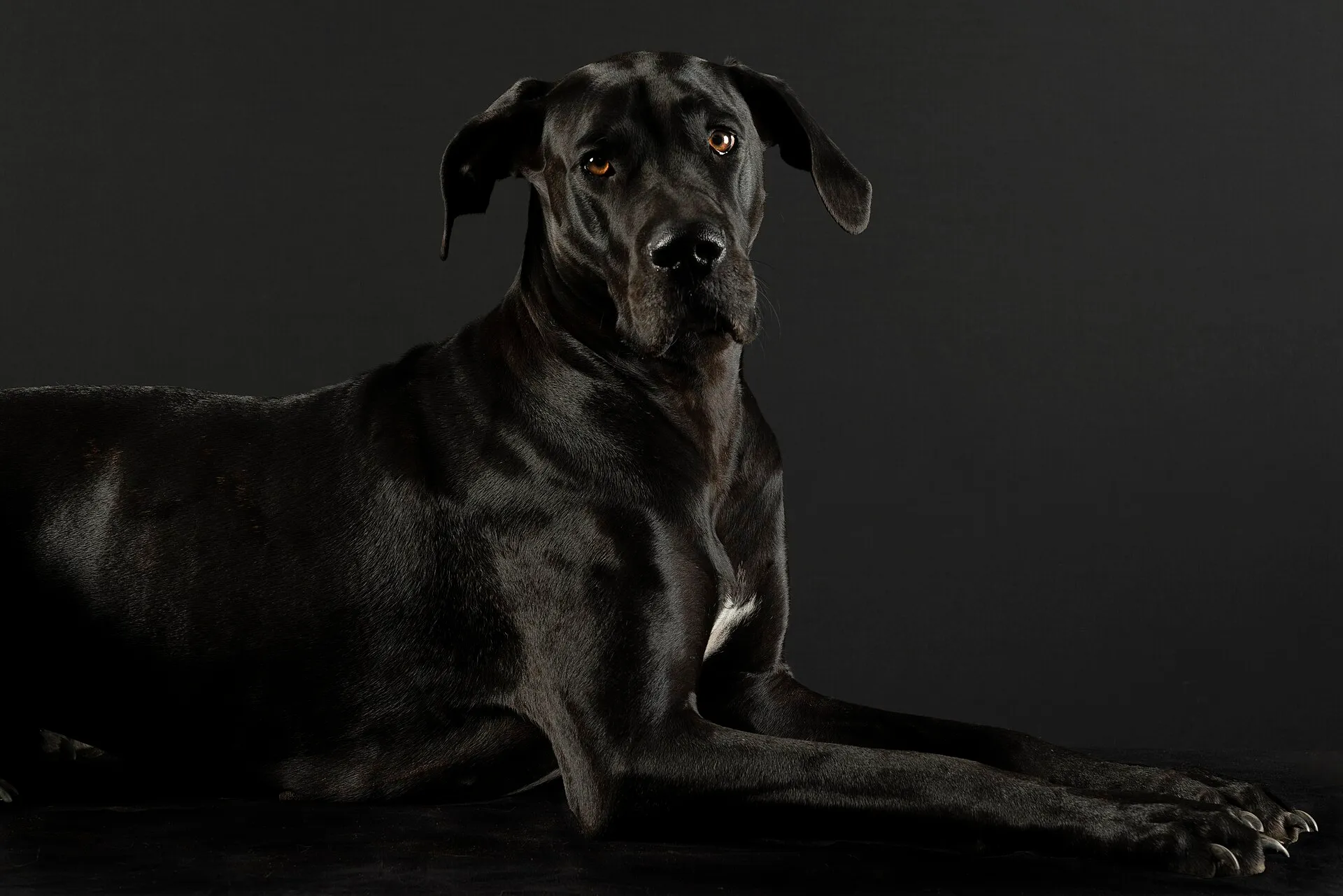
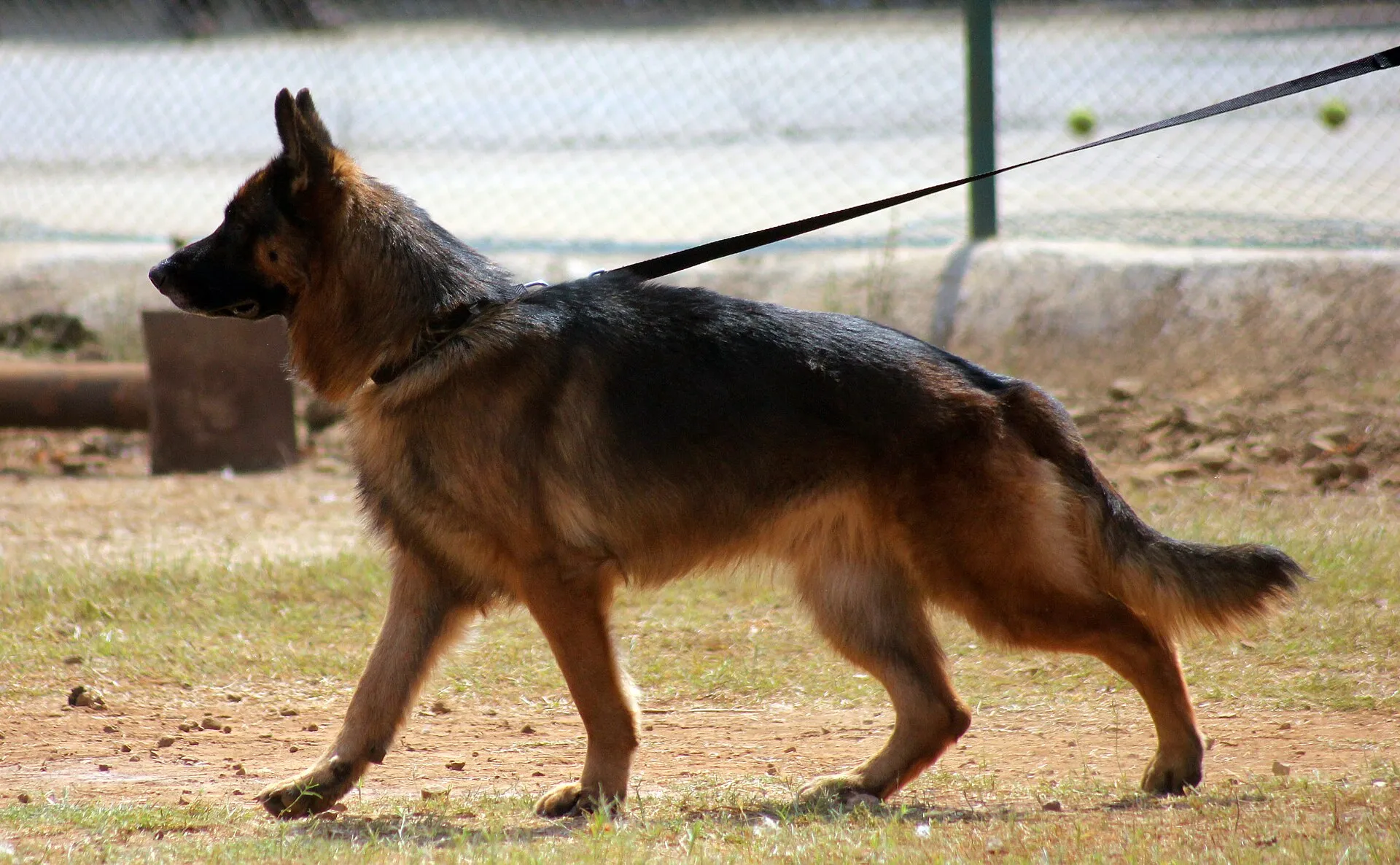
VCA Animal Hospitals lists German Shepherds, Saint Bernards, Labrador and Golden Retrievers, Old English Sheepdogs and Bulldogs among the breeds at higher risk, along with large mixed breeds. Small dogs can be affected too. If you share your life with a German Shepherd or a Labrador, assume hips are worth checking.
Signs to watch for
Hip dysplasia rarely looks dramatic at first, and the early signs are easy to mistake for a dog that is simply lazy or stiff.
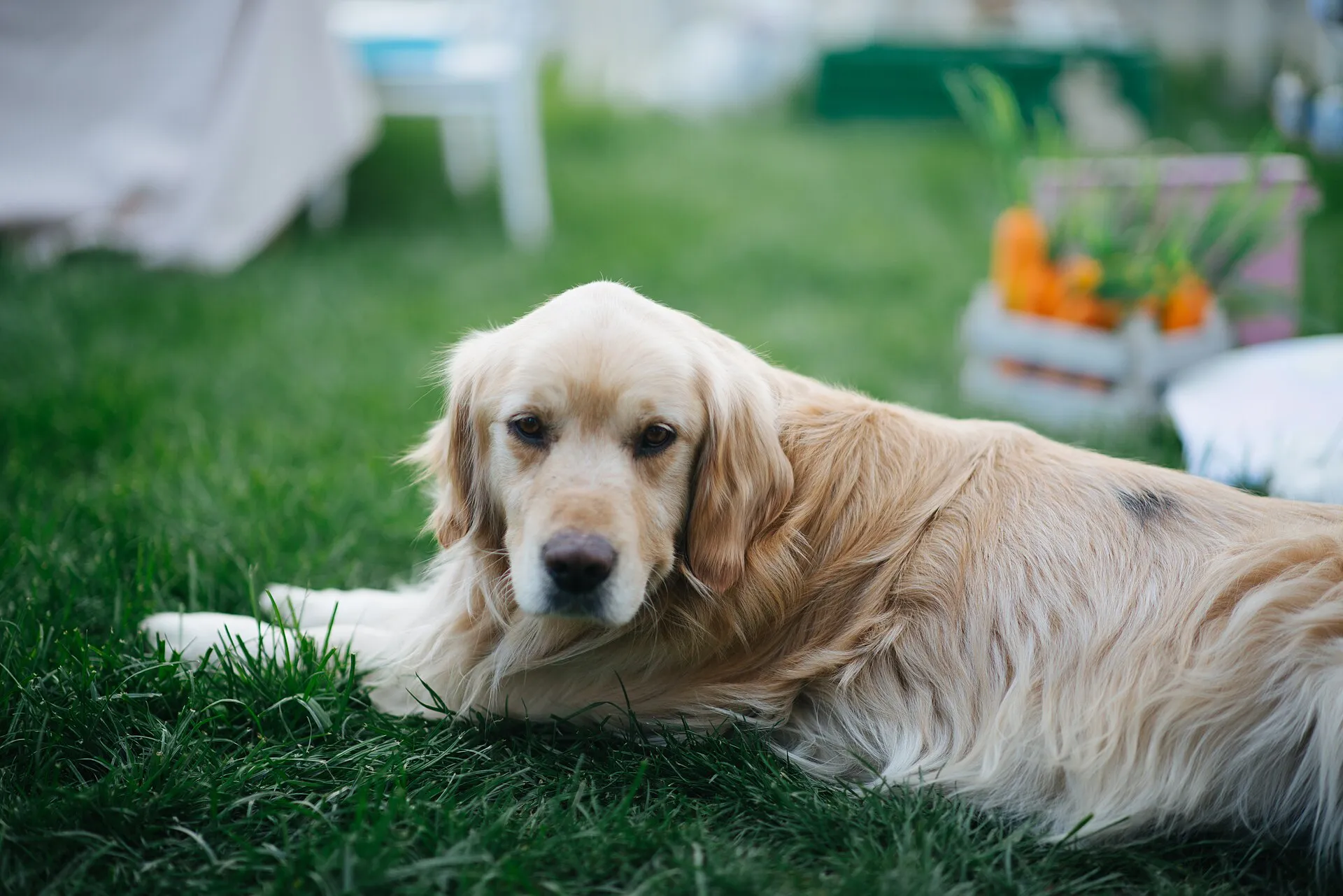
The usual clues are:
- Stiffness or slowness getting up, especially after a rest
- Reluctance to jump into the car or onto the sofa, or to climb stairs
- A “bunny-hopping” gait, where both back legs move together when running
- A swaying or wobbly walk at the back end
- Shifting weight onto the front legs, so the shoulders look bulky and the thighs thin
- Lameness that is worse after exercise
- Pain or resistance when the hips are moved
VCA says signs can start at a few months old but are most common between 1 and 2 years, while many dogs show nothing until arthritis sets in later. Both VCA and Merck point out that how a dog moves doesn’t always match its X-rays: some dogs with ugly-looking hips cope well, and some with mild changes are sore.
Dogs are good at hiding discomfort, so it helps to know the quieter signs a dog is in pain.
See a vet now if:
- Your dog suddenly can’t bear weight on a back leg, or can’t stand up.
- There is swelling, a wound or a fall or collision before the lameness started.
- Your dog cries out when moving, or won’t settle because of pain.
- Back-leg weakness comes with wobbling, scuffing the toes or changes in bladder control, which can mean a spinal problem rather than hips.
- A dog on anti-inflammatory pain relief starts vomiting, stops eating or passes black stools.
How vets diagnose it
In puppies
The ACVS says laxity can be detected from about 10 weeks of age. A vet can feel for it with the Ortolani test, which is often done at the 10–16 week vaccine visits, usually under light sedation. A positive result usually means arthritis by one year. A negative one can be a false reassurance.
PennHIP, a stress X-ray method that measures how loose the hips are, is accurate in puppies from 16 weeks, according to Antech, which runs the scheme. The ACVS considers it the most accurate early test. It needs a vet trained in the method.
Screening schemes for older dogs
- OFA (US): grades hips into seven categories, from Excellent to Severe. Preliminary screenings are available from 4 to 23 months.
- BVA/Kennel Club Hip Scheme (UK): dogs must be at least a year old. Each hip is scored on nine features, up to 53 per hip, giving a total of 0 to 106. Lower is better. Submissions start at £82.50 including VAT, plus your vet’s X-ray costs.
The ACVS’s view is that X-ray schemes done at one to two years come too late for the early preventive surgeries. Merck adds that reviews have “failed to identify a gold standard” for screening, and genome testing may eventually help. For now, VCA describes genetic tests as still being researched.
Treatment without surgery
For many dogs, and especially middle-aged or older dogs with milder laxity, conservative care is the main treatment. The OFA says up to 76% of severely dysplastic dogs with arthritis can function with weight control and controlled exercise.
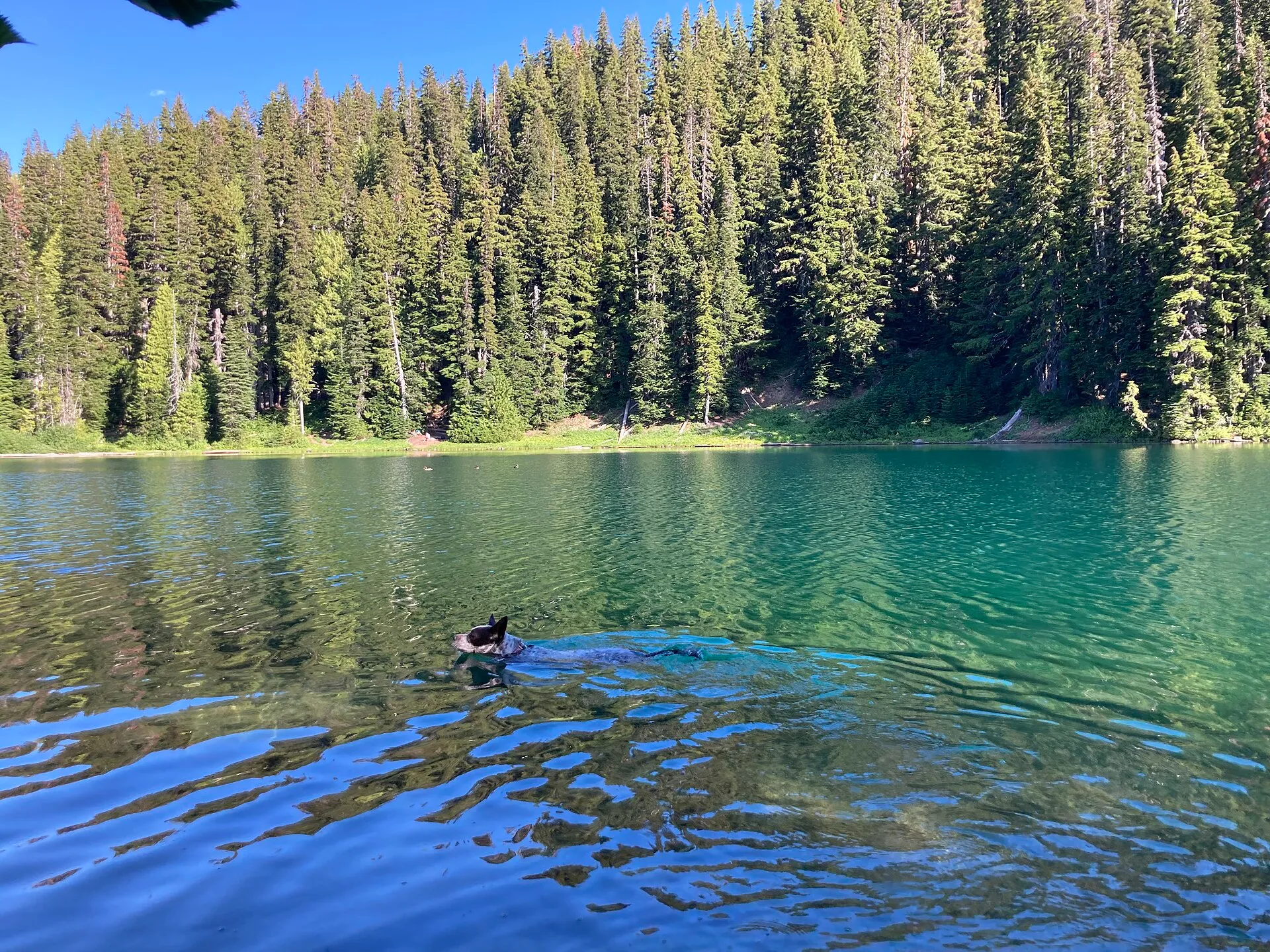
The pieces that matter most:
- Keep your dog lean. This is the one thing every source agrees on. Extra weight loads sore joints, and in a long-running study of Labradors, dogs fed 25% less than their littermates for life developed hip arthritis later. A summary of that study (Smith and colleagues, 2006) reports that half the normally fed dogs had hip arthritis by age 6, against age 12 for the restricted group. Our dog food calculator gives a starting point for portions.
- Controlled exercise. Lead walks rather than ball-chasing, and avoid long sessions on hard surfaces, as Merck advises. Moderate daily activity keeps muscles strong.
- Physiotherapy and hydrotherapy. VCA strongly recommends physical therapy as part of most plans; Merck lists hydrotherapy and laser therapy.
- Pain relief, only under your vet’s direction. NSAIDs are the backbone of treatment. The ACVS notes they need blood monitoring because of kidney and liver risk. Vets may add other drugs such as gabapentin or amantadine.
- Monthly injections. Librela (bedinvetmab), a monthly injection given by a vet, was approved by the US FDA in May 2023 for osteoarthritis pain. In January 2025 the FDA wrote to US vets about reported adverse events, including neurological signs and increased thirst and urination, and the label was updated in February 2025 with a client information sheet. Ask your vet to talk through the risks before starting.
- Supplements. Omega-3 fatty acids have some support. The ACVS says there is no peer-reviewed evidence that cartilage supplements protect or repair cartilage.
Surgical options
Which operation makes sense depends mostly on age, how much arthritis is present and the dog’s size.
| Procedure | Typical age | What it does | Recovery |
|---|---|---|---|
| Juvenile pubic symphysiodesis (JPS) | 10–18 weeks | Closes a pelvic growth plate so the socket grows over the ball | Same-day discharge possible; exercise limits until about 10 months |
| Double or triple pelvic osteotomy (DPO/TPO) | Ideally under 8–10 months, before arthritis | Cuts and rotates the pelvis to cover the ball better | About 6 weeks |
| Total hip replacement (THR) | From about 1 year | Replaces ball and socket with implants | About 8 weeks |
| Femoral head ostectomy (FHO) | Any age | Removes the ball so a “false joint” forms | Weeks to months; intensive rehab needed |
Source: ACVS. Ask your surgeon how these apply to your dog.
A few points from surgeons that are easy to miss:
- Timing is everything for JPS and DPO/TPO. The ACVS suggests hips are checked when a puppy is neutered at around 6 to 8 months, because that is close to the end of the window.
- FHO suits smaller, lighter dogs best. The ACVS says it works best in dogs under about 60–70 lb (27–32 kg), and dogs must stay lean and give up athletic work.
- Not every dog is a hip replacement candidate. Mississippi State’s vet school says only about one in ten dogs it evaluates turns out to be a good candidate. Iowa State reports good to excellent function in 95% of its THR cases.
- One hip is often enough. Iowa State says about 80% of dogs with arthritis in both hips need only one replaced.
How much hip dysplasia treatment costs
Prices vary hugely by country, city, clinic type and the size of the dog. These are published examples, not averages, and they exclude ongoing medication and physiotherapy.
| Item | US example | UK example |
|---|---|---|
| Hip screening X-rays | Ask your vet | BVA scheme fee from £82.50 plus the practice’s X-ray costs |
| Specialist consult and work-up | $1,000–$1,200 (Iowa State, undated) | £1,350 work-up including CT or X-rays (Langford, May 2026) |
| Total hip replacement, one hip | $7,000–$9,000 (Iowa State, undated) | £7,455–£8,050 by weight band (Langford, May 2026); £8,000 (Cambridge, undated) |
| Femoral head ostectomy | No published university price found | £3,990–£4,725 (Langford); £4,000 (Cambridge) |
| Double or triple pelvic osteotomy | No published university price found | £6,090–£6,825 (Langford) |
| Two-month recheck after THR | $700–$900 (Iowa State) | Ask |
All UK prices above include VAT. On Iowa State’s figures, our own arithmetic puts one hip replacement with consult and recheck at roughly $8,700 to $11,100, before any complications. Iowa State adds about $1,000 if a femur fracture has to be repaired during surgery.
For a sense of more everyday bills, Animal Friends says its average 2025 claim for hip or elbow dysplasia surgery was £1,578, and its average hip dysplasia claim for giant dogs (over 50 kg) was £2,330. Those figures mix many types of treatment.
We could not find published university or regulator prices for Canada, Australia or the EU. Ask for a written, itemised estimate wherever you are.
Insurance and hip dysplasia
Hips are where the small print bites hardest.
- Pre-existing signs. If a vet has noted stiffness, laxity or a limp before cover starts, expect the hips to be excluded.
- Bilateral exclusions. Some policies treat conditions that affect both sides of the body as one, so a problem in one hip before cover can exclude the other. Look for the word “bilateral” in the wording.
- Long orthopaedic waits. Some US policies apply a hip dysplasia wait of 6 to 12 months, and at least one only covers hips if the dog is enrolled before age 6.
- Hereditary conditions. Check that inherited and congenital conditions are covered at all, and on what terms.
Our guide to pet insurance waiting periods explains how these clauses work in different countries.
Lowering the risk in a puppy
You can’t change your puppy’s genes once they’re home, but you can choose a litter carefully and manage growth.
- Check the parents. The BVA advises breeding only from dogs at or below the breed median score and asking to see both parents’ results. It also says good scores lower risk without removing it.
- Grow slowly. VCA recommends measured meals rather than free feeding and a large-breed growth diet in the first year.
- Keep them lean. Overweight puppies are at higher risk, according to VCA.
- Ask about neutering timing. VCA says early neutering may raise the risk in some dogs, so discuss it with your vet.
- Ask for a hip check early. For high-risk breeds, mention hips at the puppy vaccine visits.
The bottom line
Hip dysplasia is common in big dogs, often quiet for years and very manageable when caught and handled well. Keep your dog lean, choose steady exercise, use pain relief under your vet’s direction, and ask about hips early if you have a large-breed puppy, because the cheaper preventive surgeries have a short window. If surgery is on the table, get an itemised estimate and read your policy’s orthopaedic clauses before you book.
Questions owners ask
At what age does hip dysplasia show up in dogs?
Loose hips can be felt in puppies as young as 10 weeks, and signs often appear at 1 to 2 years. Many dogs show nothing until arthritis develops in middle or old age.
Can a dog live a normal life with hip dysplasia?
Many can. The Orthopedic Foundation for Animals says up to 76% of severely dysplastic dogs with arthritis can function with weight control and controlled exercise, and surgery helps many of the rest.
Do joint supplements help hip dysplasia?
Omega-3 fatty acids have some supporting evidence for arthritis. The American College of Veterinary Surgeons says there is no peer-reviewed evidence that cartilage supplements protect or repair cartilage.
Does pet insurance cover hip dysplasia?
Often, if the condition showed no signs before cover started and you are past any orthopaedic waiting period. Some US policies only cover hips if the dog was enrolled young, and many policies exclude the second hip if the first was already affected.
Is hip dysplasia genetic?
Genetics is the biggest single risk factor, but growth rate, diet and exercise also play a part. That is why dogs from well-scored parents can still develop it.
Sources
- American College of Veterinary Surgeons: Canine Hip Dysplasia
- Merck Veterinary Manual: Hip Dysplasia in Dogs
- VCA Animal Hospitals: Hip Dysplasia in Dogs
- Orthopedic Foundation for Animals: Hip Dysplasia
- BVA: Canine Hip Dysplasia Scheme
- Antech: PennHIP
- Iowa State University Lloyd Veterinary Medical Center: Total hip replacement candidates and costs
- Langford Vets: Orthopaedic surgery prices (as at 1 May 2026)
- Cambridge Veterinary School Queen's Hospital: Orthopaedic fixed prices
- Animal Friends: Vet fees for dogs (2025 claims data)
- US FDA: FDA approves first monoclonal antibody for dogs with osteoarthritis pain
- dvm360: Librela label is updated (February 2025)
- Functional Breeding: Effects of diet restriction on hip health (summary of Smith et al., JAVMA 2006)
- Mississippi State University CVM: Totally Hip (March 2025)
This guide is general information, not a substitute for advice from a vet who has examined your dog. Every claim is checked against the sources above. How we research and fact-check. Spotted an error? Tell us.