The short answer
- Run your flat hands along your dog's sides: you should feel the ribs easily under a thin layer of fat, see a waist from above and a tuck from the side.
- On the 9-point scale vets use, 4–5 is ideal and each point above 5 means roughly 10% extra body weight, so a 7 is about 20% overweight.
- Keep treats, chews and table scraps to no more than 10% of your dog's daily calories, and count every one.
- Weigh your dog regularly during a diet and aim for slow, steady loss; in a large international study, dogs lost about 11% of their weight in 3 months.
- Ask your vet to record a body condition score at every visit, because many owners of overweight dogs don't recognise it.
Your dog is probably overweight if you have to press to feel its ribs, you can’t see a waist when you look down from above, or its belly hangs level or bulges instead of tucking up behind the ribcage. Vets turn those three checks into a body condition score (BCS) from 1 to 9, where 4 or 5 is ideal and every point above 5 means roughly 10% too much body weight.
It’s worth checking properly, because many of us are bad at judging our own dogs. In the Association for Pet Obesity Prevention’s 2022 US survey, vets rated 59% of dogs as overweight or obese, and 36% of owners whose dogs scored 6 to 9 described them as a normal weight.
Why the scale alone doesn’t answer the question
A number on the scales tells you whether your dog is gaining or losing, but not whether that number is right for its frame. A 30 kg (66 lb) Labrador might be lean or tubby depending on its build and muscle.
That is why vets use body condition scoring. The 2021 guidelines from AAHA, the American Animal Hospital Association, say the 9-point scale has been validated against DEXA body-fat scans, and recommend all vets use it with whole numbers. According to those guidelines:
- Each step up the scale is about 5% more body fat
- Each point above 5 is about 10% overweight
- So a dog scoring 7 is roughly 20% heavier than its ideal, and a 9 is about 40% heavier
Some practices still use a 5-point scale, where 3 is ideal. If your vet’s notes say “BCS 3”, ask which scale they mean.
How to check your dog’s body condition at home
You need two minutes, your hands and a dog willing to stand still. Long or thick coats hide a lot, so feel rather than look on fluffy breeds.
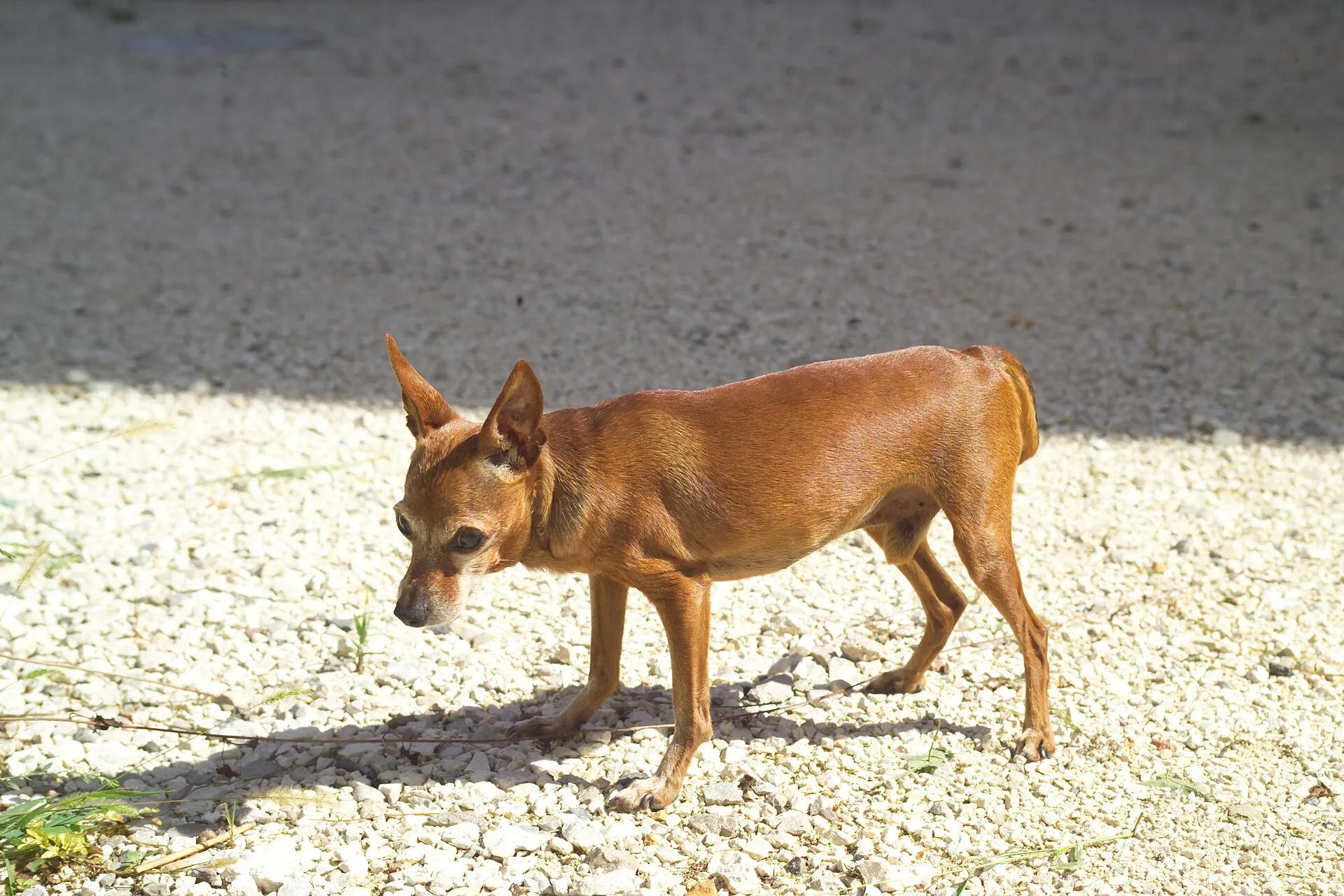
- Ribs. Stand behind or beside your dog and spread your flat hands over its ribcage. PDSA’s test is that the skin should move freely over the ribs and you should be able to feel them with a light touch.
- Waist from above. Look down on your dog standing. There should be a visible inward curve behind the ribs.
- Tuck from the side. Crouch to dog level. The line of the belly should rise from the chest towards the back legs, not run level or sag.
- Spine and hips. PDSA says you should feel the spine and hip bones under the skin without being able to see them.
- Base of the tail. Feel where the tail joins the body. A soft pad of fat here is an early sign of excess weight.
Then match what you found to the chart below.
The 9-point body condition score, explained
These descriptions follow the WSAVA (World Small Animal Veterinary Association) chart used by vets worldwide.
| Score | What you feel and see | Where it sits |
|---|---|---|
| 1 | Ribs, spine, pelvic bones and other bones visible from a distance; no body fat; obvious muscle loss | Very thin |
| 2 | Ribs, spine and pelvic bones easily visible; no fat you can feel; minimal muscle loss | Thin |
| 3 | Ribs easily felt and may be visible with no fat; tops of spine visible; pelvic bones prominent; obvious waist and tuck | Underweight |
| 4 | Ribs easily felt with minimal fat; waist easily seen from above; tuck evident | Ideal |
| 5 | Ribs felt without excess fat; waist visible behind ribs from above; belly tucked up from the side | Ideal |
| 6 | Ribs felt with slight excess fat; waist visible from above but not prominent; tuck still there | Overweight |
| 7 | Ribs felt only with difficulty under heavy fat; fat deposits over the lower back and tail base; waist absent or barely visible | Overweight |
| 8 | Ribs not felt under very heavy fat, or only with firm pressure; heavy fat over lower back and tail base; no waist or tuck; belly may be distended | Obese |
| 9 | Massive fat over chest, spine and tail base; fat on neck and legs; no waist or tuck; obvious distended belly | Obese |
Source: WSAVA Body Condition Score chart (2013).
Don’t forget muscle
Fat and muscle are scored separately. WSAVA’s muscle condition chart grades muscle as normal or as mild, moderate or severe loss, which is usually noticed first along the muscles either side of the spine. The chart makes a point that surprises owners: an overweight dog can still have significant muscle loss. That changes how a vet designs a diet, because losing fat while keeping muscle is the goal.
How common is it, really?
Estimates vary hugely depending on who does the measuring, which is itself telling.
- US, 2022: in APOP’s survey, vets scored 40% of dogs as ideal (BCS 4–5), 37% as overweight (6–7) and 22% as obese (8–9).
- UK, 2016 records: a study of 22,333 dogs under vet care, published in 2021 using VetCompass records, found only 7.1% recorded as overweight. The authors concluded vets were under-reporting it.
- US, 2024: only 27% of dog owners in APOP’s 2024 opinion survey remembered their vet giving them a body condition score.
The UK study also found which dogs carried the highest odds compared with crossbreeds: Pugs (about 3.1 times), Beagles (2.7), Golden Retrievers (2.6) and English Springer Spaniels (2.0). Being neutered, middle-aged and insured were also linked to being overweight. The AAHA guidelines note that energy needs fall after spaying or neutering, so portions often need trimming afterwards.
Why a few extra kilos matter
PDSA lists conditions linked with obesity in dogs, including arthritis, diabetes, cruciate ligament problems, breathing problems, heatstroke, some cancers, extra risk under anaesthetic and a shorter life.
The lifespan evidence is unusually strong:
- A lifelong study of Labradors. In a study of 48 Labrador Retrievers published in 2002, one dog of each pair was fed 25% less than its partner from 8 weeks of age until death. The leaner dogs lived significantly longer, and the onset of signs of chronic disease was generally delayed.
- Pet dogs in real homes. A 2019 study of 50,787 neutered pet dogs across 12 breeds at around 900 North American vet hospitals found overweight dogs had shorter median lives in every breed. The gap was largest in Yorkshire Terriers (13.7 years overweight versus 16.2 years at a normal weight) and smallest in German Shepherds (12.1 versus 12.5 years).
A safe weight-loss plan
Start with a vet visit, not the food bowl. Weight gain can come with medical problems, and your vet can set a realistic target weight and calorie allowance. Many practices run weight clinics, and PDSA notes that many have waiting-room scales you can use without an appointment.
1. Work out what your dog really eats
Write down everything for a week: meals, treats, dental chews, training rewards, the crust of toast, the cheese that goes round a tablet. The AAHA guidelines recommend that complete and balanced food makes up at least 90% of daily calories, with treats and extras capped at 10%. Our dog food calculator gives a starting estimate for daily calories, which your vet can then refine.
2. Feed for the target weight, with the right food
Your vet calculates calories from your dog’s ideal weight, not its current one. The AAHA guidelines recommend a therapeutic weight-loss diet when calories have to drop a lot, because simply feeding less of a normal food also cuts protein and micronutrients. These diets are also designed to help preserve muscle during weight loss.
3. Weigh, score and adjust
Weigh your dog regularly on the same scales, at the same time of day, and rescore its body condition as you go. Your vet will suggest how often. Expect slow progress. In an international study of 926 overweight dogs at 340 practices in 27 countries, published in 2017, 97% lost weight on a vet-guided plan, losing an average of 11.4% of their starting weight over 3 months. That is roughly 1% a week. Owners also reported their dogs became more active and had a better quality of life as the weight came off.
4. Move more, gradually
Build up exercise in step with your dog’s fitness and joints. An overweight dog with sore joints may do better with several short walks, swimming or vet-guided rehabilitation than with one long outing. Our guide to how much exercise a dog needs has breed and age guidance.
5. Replace food with attention
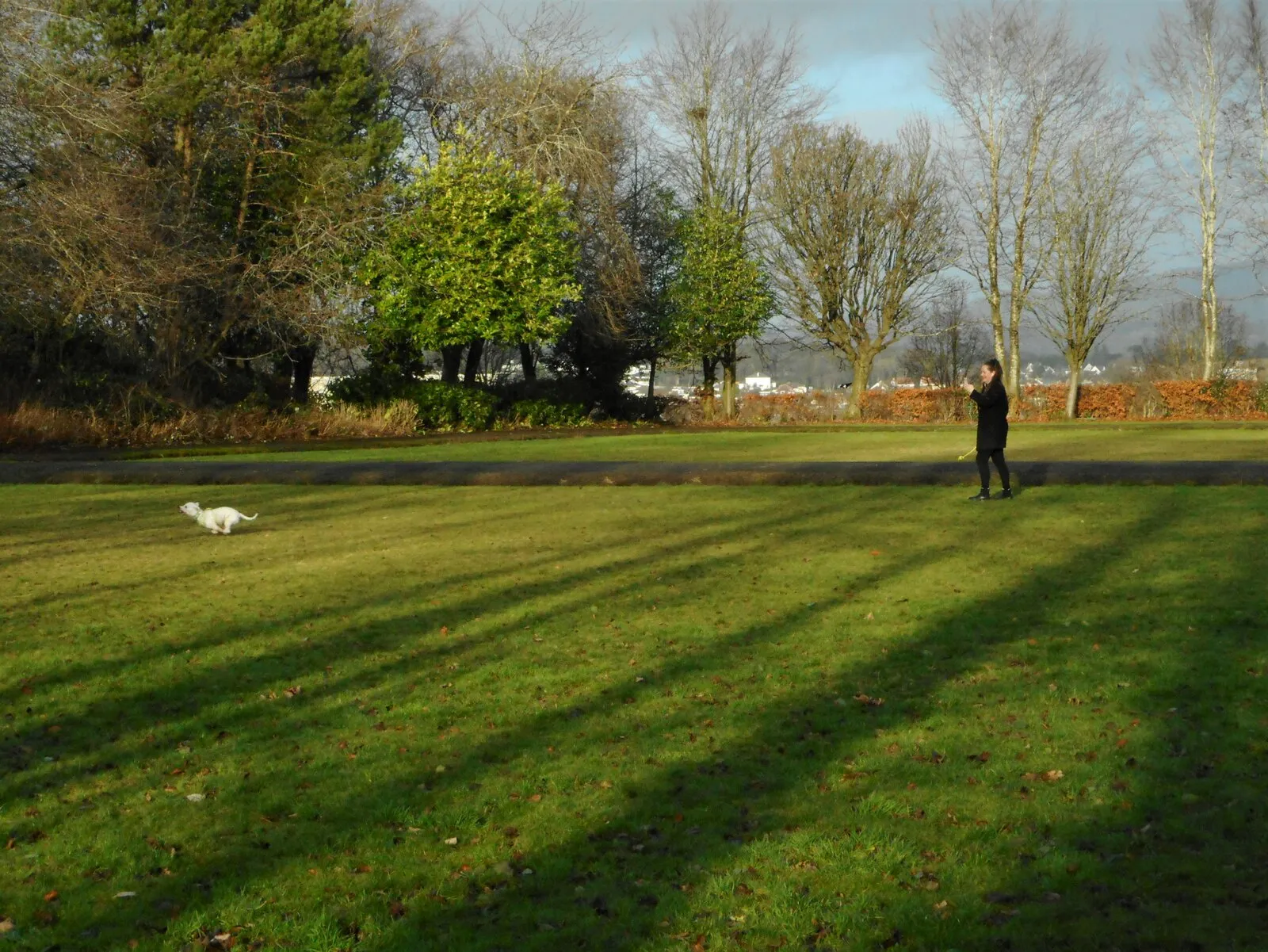
AAHA’s guidelines note that the first few days of a diet are often the hardest for owners, because food is how many of us show affection. Swap some treats for play, grooming, sniff walks or training with low-calorie rewards taken from the daily ration. Puzzle feeders and slow-feed bowls make meals last longer. Fitness trackers may also help keep owners motivated.
6. Keep it off
The AAHA guidelines say failing to achieve and keep weight loss is common, and owner follow-through is a major factor. Keep weighing monthly after you reach the target, keep the treat rule, and recheck the body condition score every few months. PDSA recommends regular weigh-ins even after a dog reaches a healthy weight.
See a vet now if:
- Your dog is gaining weight despite eating the same or less, or seems unusually tired, cold or thirsty
- Your dog’s belly has suddenly swollen, which is not the same as gradual fat gain
- Your dog is losing weight without trying, or its ribs, spine and hips have become prominent
- Your dog is struggling to breathe, overheating easily or can no longer manage its usual walk
- You plan a big calorie cut or a new diet for a dog with diabetes, kidney, liver or heart disease
The bottom line
You can check your dog’s body condition at home in two minutes: feel the ribs, look for a waist from above and a tuck from the side. On the vets’ 9-point scale, 4–5 is ideal and every point above that means about 10% extra weight, which is linked to shorter lives and more disease. Weight loss works best as a vet-guided plan with a measured daily ration, treats capped at 10% of calories, regular weigh-ins and patience, because about 1% a week is a good pace. Ask your vet for a body condition score at every visit so you are both judging by the same yardstick.
Questions owners ask
What is a healthy body condition score for a dog?
On the 9-point scale, 4 or 5 is ideal. At 5 you can feel the ribs without excess fat, see a waist behind the ribs from above, and the belly tucks up when you look from the side.
How can I tell if my dog is overweight without scales?
Use your hands and eyes rather than the number. If you have to press to feel the ribs, can't see a waist from above, or there is a fat pad at the base of the tail, your dog is likely above ideal.
How fast should an overweight dog lose weight?
Slowly. In a study of 926 overweight dogs in 27 countries, dogs on a vet-guided diet lost an average of 11.4% of their body weight over 3 months, roughly 1% a week. Your vet will set a target and adjust the plan at weigh-ins.
Can I just feed my dog less of its normal food?
Cutting a regular food hard can also cut protein, vitamins and minerals. The 2021 AAHA guidelines recommend a therapeutic weight-loss diet when calories need to drop a lot, so ask your vet before slashing portions.
Which breeds are most prone to being overweight?
In UK vet records, Pugs, Beagles, Golden Retrievers and English Springer Spaniels had the highest odds compared with crossbreeds. Being neutered and middle-aged also raised the odds.
Sources
- WSAVA: Body Condition Score chart for dogs (2013)
- WSAVA: Muscle Condition Score chart for dogs (Tufts University, 2013)
- AAHA: 2021 Nutrition and Weight Management Guidelines for Dogs and Cats (Cline et al., JAAHA)
- Association for Pet Obesity Prevention: 2022 Pet Obesity Survey Results
- Association for Pet Obesity Prevention: 2024 Pet Obesity Survey Results
- Pegram et al. (2021): Frequency, breed predisposition and demographic risk factors for overweight status in dogs in the UK, J Small Anim Pract
- Salt et al. (2019): Association between life span and body condition in neutered client-owned dogs, J Vet Intern Med
- Kealy et al. (2002): Effects of diet restriction on life span and age-related changes in dogs, JAVMA
- Flanagan et al. (2017): Success of a weight loss plan for overweight dogs, PLOS ONE
- PDSA: Obesity in dogs
This guide is general information, not a substitute for advice from a vet who has examined your dog. Every claim is checked against the sources above. How we research and fact-check. Spotted an error? Tell us.